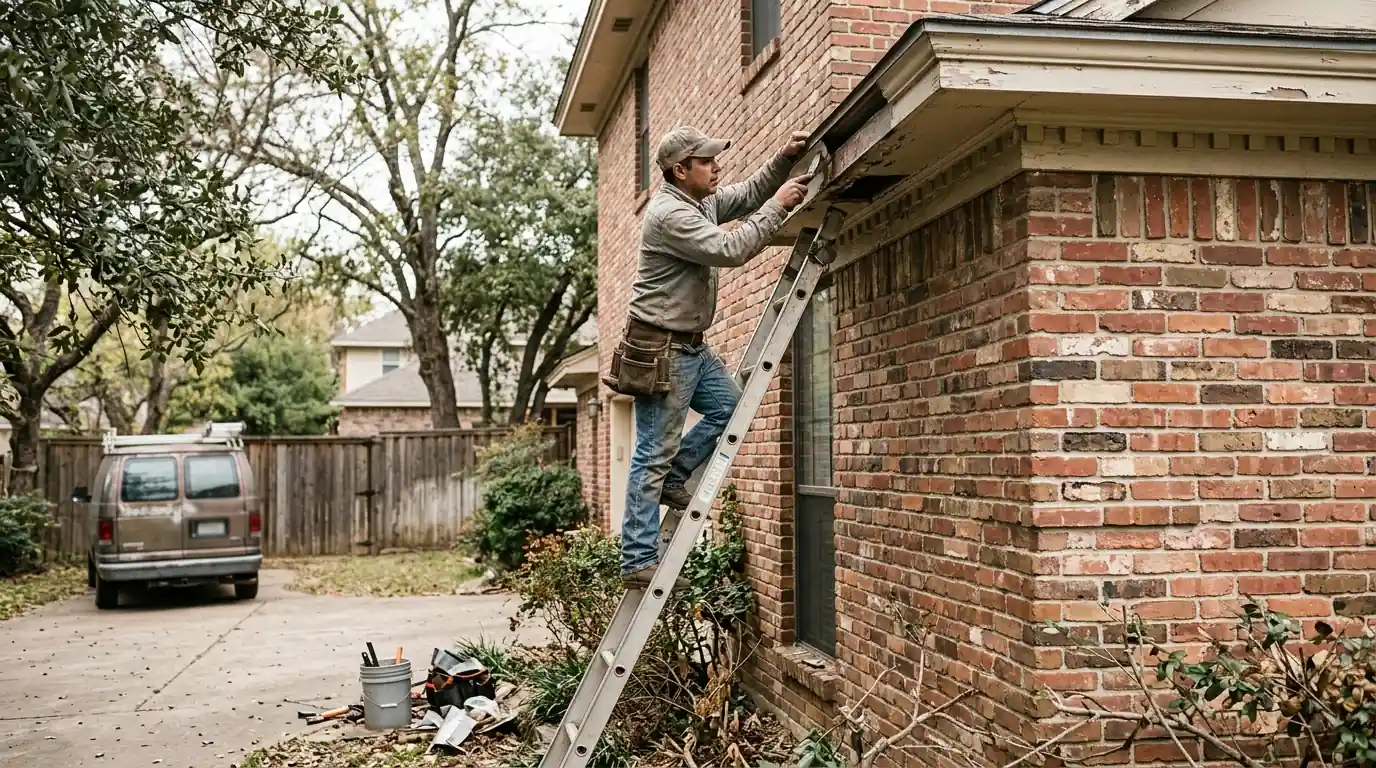
Short answer. Box gutter repair in Dallas usually means resealing failed seams, relining a worn trough with new metal or membrane, and making sure an overflow path exists. Because box gutters sit inside the roof line, a leak shows up as a stain on a ceiling or wall rather than a drip outside, so early repair saves interior damage.
Why box gutters need special care
A hung gutter that leaks drips outside. A box gutter that leaks drips into the eave, the wall or the ceiling below. That is the trade-off of a gutter built into the roof: it looks clean from the street, but every failed seam is a hidden leak.
Many box gutters were lined with metal decades ago and have been patched since. Patching over patches eventually stops working, and relining is the lasting fix. On commercial roofs, box gutters often feed conductor heads that need checking too.
What decides the cost of box gutter work
We have no sourced price range for box gutters, so these are the factors that set yours.
- 1Repair or reline
Resealing joints costs far less than relining.
- 2Lining material
Metal and membrane linings price differently.
- 3Framing rot
Rotted wood around the trough adds carpentry.
- 4Length and access
Long runs and tall buildings take more time.
- 5Outlets and overflow
Rebuilt outlets or added overflow.
Built-in box gutters
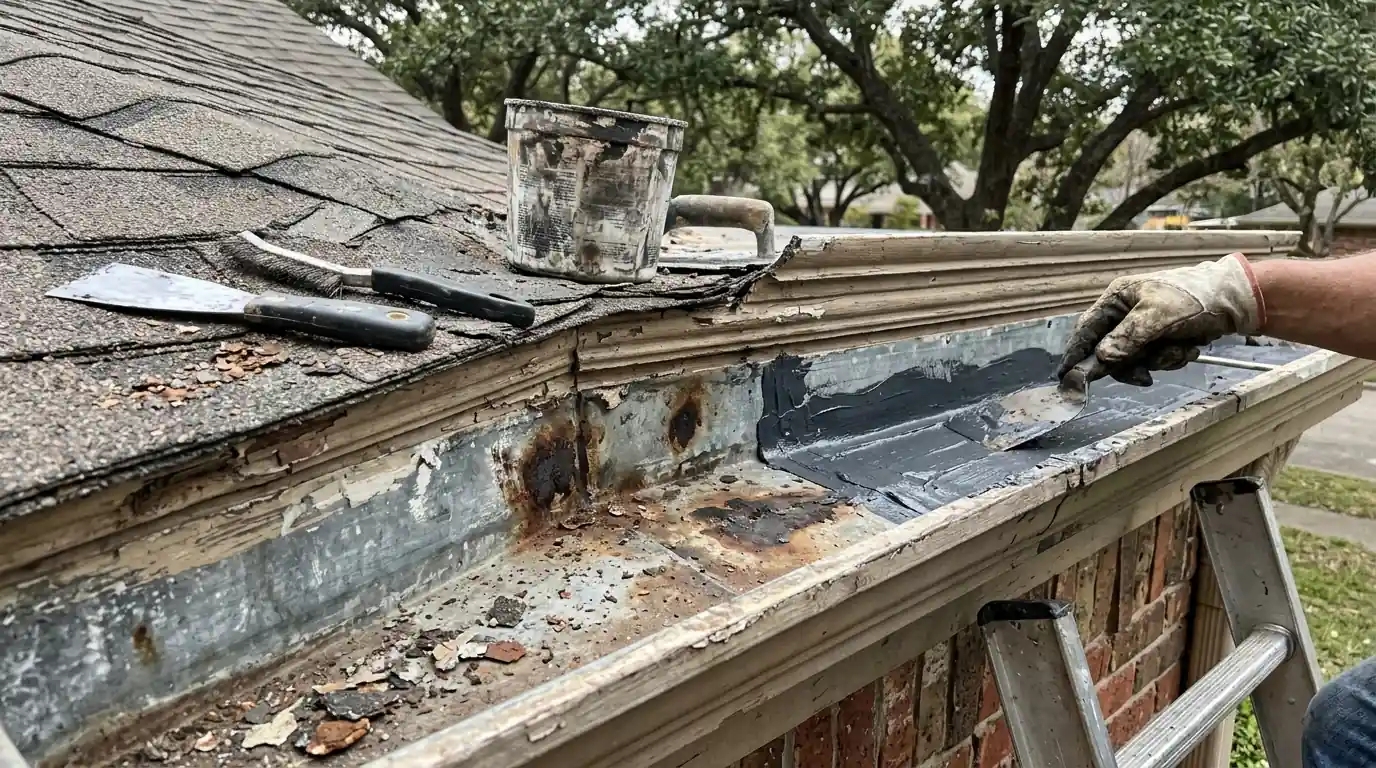
Built-in gutters are troughs framed into the roof edge and lined with metal, common on older homes and some commercial buildings. We open the area, inspect the lining and the wood around it, and repair rot in the framing before any new lining goes in.
Relining
When a lining is worn through or full of old patches, we reline it: new metal formed to the trough, or a modern membrane system, carried up under the roofing so water cannot get behind it. Relining keeps the original look from the street while giving the trough a new watertight surface.
Seam and joint failures
Joints between sections of lining, and the outlet where the trough drains, are where box gutters fail first. We clean and reseal sound joints, solder where the metal allows it, and rebuild outlets that have separated from the lining.
Overflow protection
Because an overflowing box gutter spills inside, an overflow path matters more than on a hung gutter. We check that the trough has an outlet large enough for heavy rain and add an overflow outlet or scupper where it does not.
Box gutters on older Dallas homes
Box gutters turn up on the older side of Dallas. Kessler Park, south of the Trinity River, is known for its hills, trees and homes from the 1930s, an era when some houses were built with gutters framed into the roof edge rather than hung from the fascia. After 90 years of Texas sun and storms, those linings are usually due for more than another patch.
Signs a box gutter is failing
- Ceiling stains near the eave
Water marks inside along an outside wall.
- Peeling paint on the cornice
Paint failing on the trim around the gutter.
- Standing water in the trough
Water held in the gutter after rain.
- Old patches
Layers of tar or sealant over the lining.
- Rot at the roof edge
Soft wood around the gutter box.
How long box gutter repairs take
Resealing a few joints can be a short visit. Relining a run takes longer, often a day or more depending on length and whether framing needs repair. We plan around dry weather because the trough is open while we work, and we cover it at the end of each day.
How a box gutter repair goes
Find the leak
We trace stains inside to the failing joint or lining.
Open the trough
Old patches and debris removed.
Fix the framing
Rotted wood repaired.
Reseal or reline
Joints sealed or a new lining installed.
Test
Water run through the trough and outlets.
Box gutter questions
A gutter built into the roof edge or behind a parapet, rather than hung off the fascia.
Because they sit inside the roof line, a failed seam drains into the eave or wall.
Yes, with new metal or a membrane lining, keeping the original look.
Sometimes that is cheaper, but it changes the look. We talk through both.
Yes, on offices, churches and older commercial buildings.
Stains on ceilings or walls near the roof edge are the usual sign.