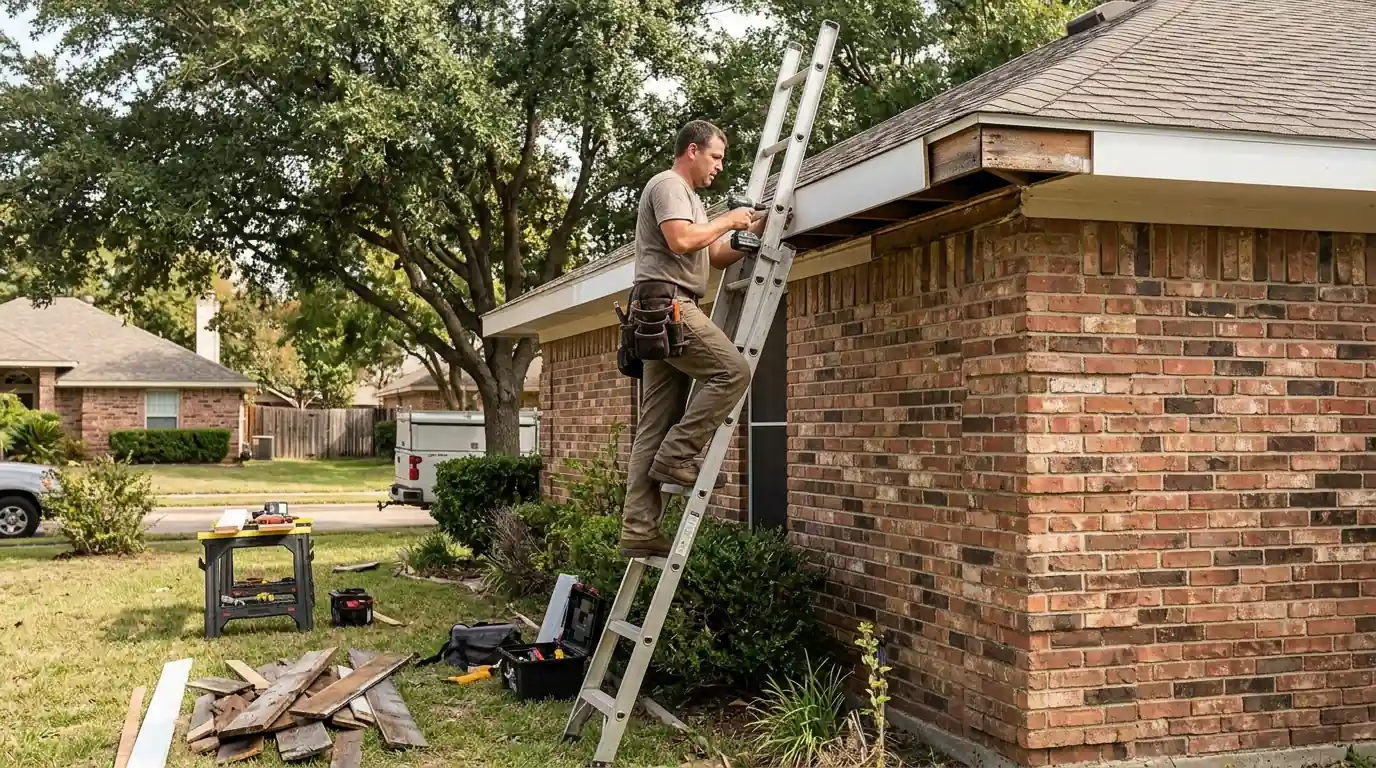
Short answer. Fascia board repair in Dallas usually means cutting out the rotted section behind the gutter, replacing it with new wood or composite, and rehanging the gutter. National guides put fascia replacement at about $8 to $12 per linear foot. Most single-story repairs take a day, including priming the new boards.
Why fascia rots behind gutters
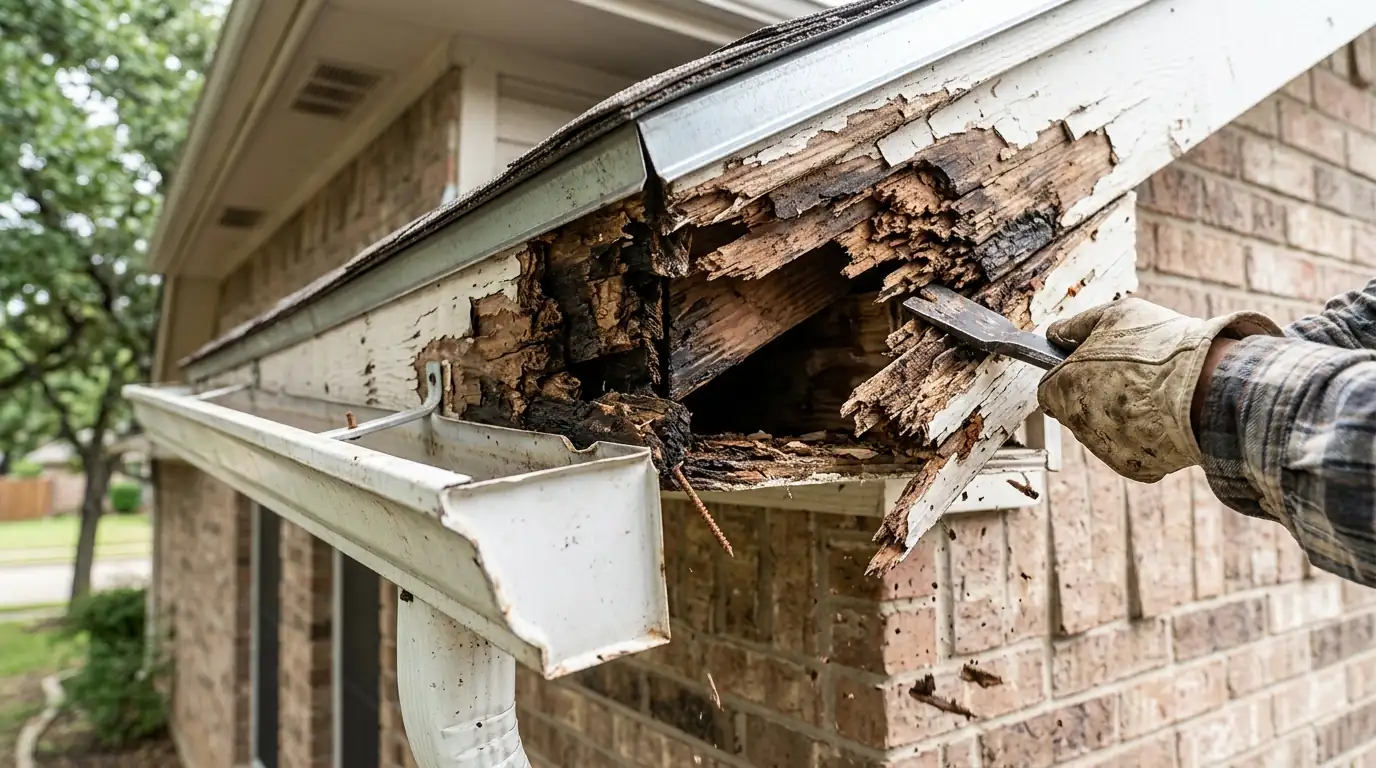
Fascia rots from the back. Water that overshoots or runs behind the gutter soaks the board where you cannot see it, and the paint on the front looks fine until the wood gives way. A gutter that sags or tips forward is often the first sign.
Fixing the gutter alone does not hold. New hangers need solid wood to grip. So we replace the rotted length, find out why water got there, often a missing drip edge or a gutter pitched toward the wall, and fix that too.
What decides the cost of fascia repair
Fascia repairs are priced by the length replaced and what else the rot reached.
- 1Length of rot
Short patches cost less than full boards.
- 2Board material
Composite and PVC cost more than wood.
- 3Rafter tails
Rot that reached the rafters adds carpentry.
- 4Gutter condition
A bent or leaking gutter may be replaced while it is down.
- 5Height and access
Second-story eaves take longer to set up.
National cost guides put fascia replacement at about $8 to $12 per linear foot (RoofingCalc). This is a planning range, not our quote.
Rot behind the gutter
We take the gutter down along the bad section and probe the board. Soft wood is cut back to sound wood on both sides, so the new piece joins solid material. Short sections are patched; long stretches get a full new board. We prime cut ends and the back of new wood before it goes up, because the back is where water attacks first.
Wood or composite boards
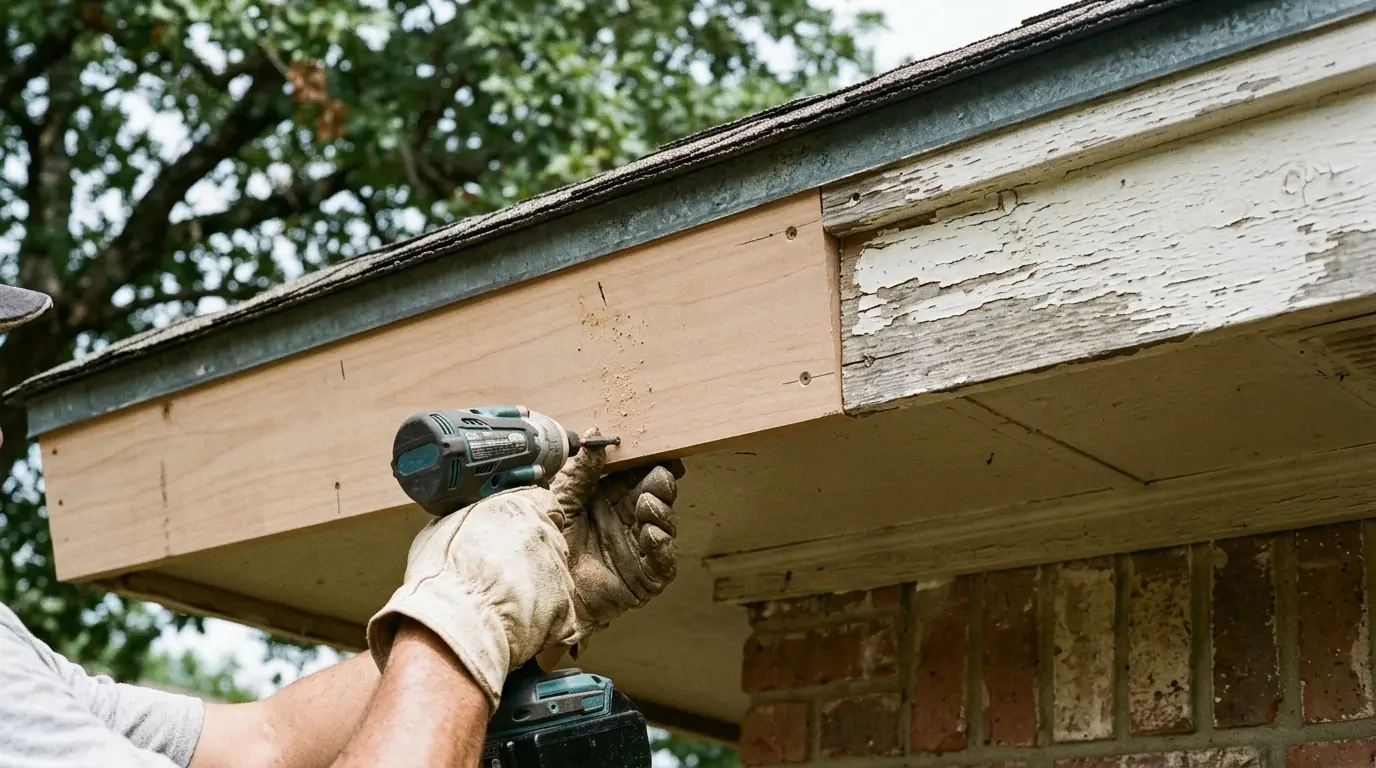
Primed pine or cedar boards match most Dallas homes and take paint well. Cellular PVC and composite boards do not rot at all, cost more, and suit runs that have rotted before. Either can be painted or wrapped in aluminum afterward. We will tell you which makes sense for the spot and your budget.
Corners and rafter tails
Rot spreads. At a corner it often runs into the end of the next board, and behind the fascia it can reach the rafter tails the board is nailed to. We check both. Soft rafter tails are sistered or repaired before new fascia goes on, so the board has something solid to fasten to.
Rehanging the gutter
Once the board is sound, the gutter goes back up on new hidden hangers at proper spacing and the right pitch. If the old gutter was bent or leaking, we tell you whether it is worth rehanging or whether a new run makes more sense while it is already down.
Fascia on Dallas ranch homes
Fascia rot is a steady call from Lake Highlands, where ranch homes are the signature style and the L Streets alone hold about 1,050 single-family houses from the mid-1950s and later. Those long, low eaves put the fascia close to the beds and sprinklers, and many still carry original wood boards. After decades of overflowing gutters, the back of that wood is where rot starts.
Signs the fascia behind your gutter is rotting
- Gutter tipping forward
The front of the gutter sits lower than the back.
- Soft spots
Wood that dents or crumbles when pressed.
- Peeling paint in a line
Paint failing just below the gutter.
- Gaps at the roof edge
Daylight or a gap between the board and the roof deck.
- Hangers pulling out
Screws or spikes backing out of the wood.
How long a fascia repair takes
A few soft sections on a single-story house is usually a one-day job: gutter down, rot out, new boards up, primed, and the gutter rehung. Longer runs, rafter tail repairs or second-story work can stretch to two days. Paint on the new boards may need a separate dry day before the final coat.
How a fascia repair goes
Probe the boards
We find exactly where the wood is soft.
Take the gutter down
Only the sections over bad boards come off.
Cut out the rot
Back to sound wood, rafter tails checked.
Fit new boards
Primed on all sides, fastened to solid framing.
Rehang and test
Gutter back on new hangers, then a hose test.
Fascia repair questions
Yes. Short rotted sections can be cut out and patched, as long as the joints land on sound wood.
Wood matches and paints easily; composite does not rot. Composite makes sense where a board has rotted before.
Usually water getting behind the gutter: a missing drip edge, a gutter pitched toward the wall, or years of overflow.
We prime them. Final paint or aluminum wrap can be done once the primer is dry.
If it is straight and sound, yes. If it is bent or leaking, we will say so.
Yes. Rot often reaches the rafter tails, and new fascia needs solid framing.