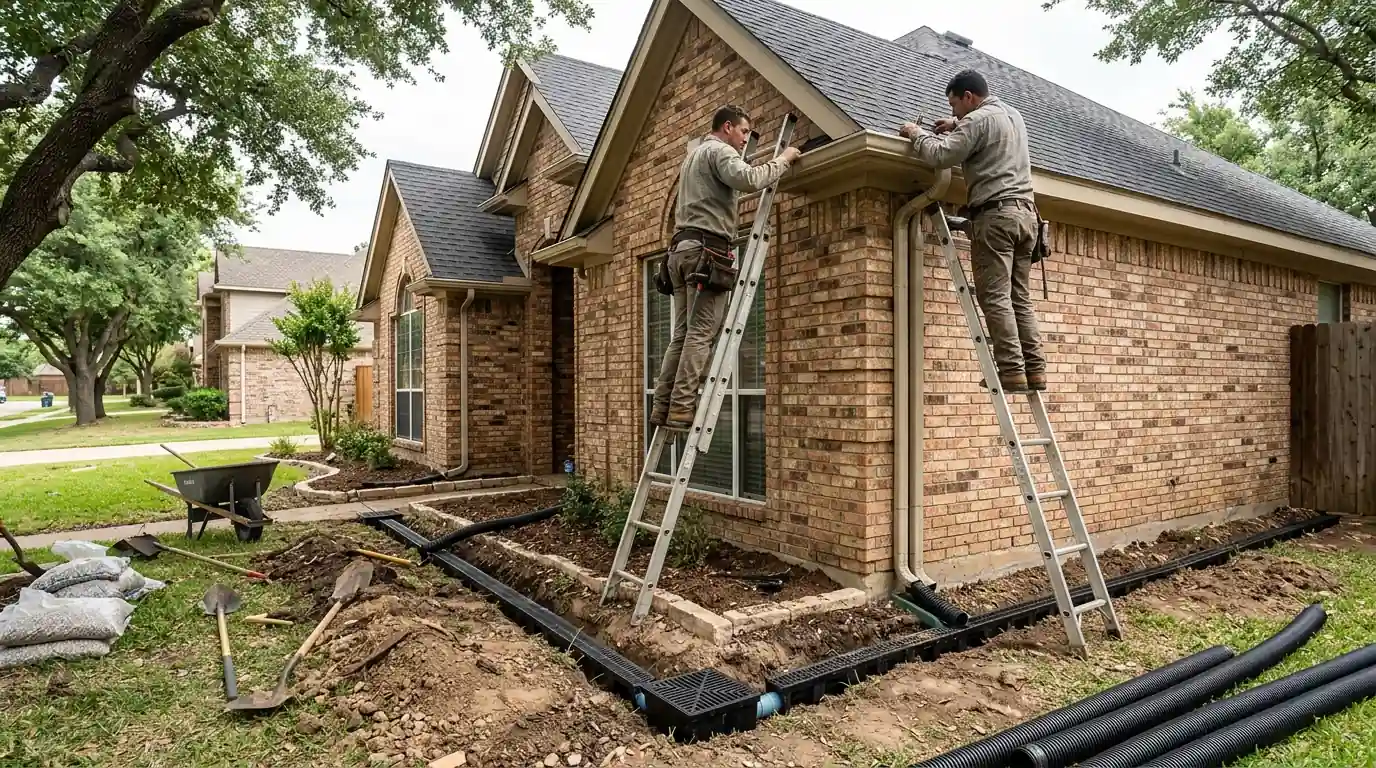
Short answer. Catch basins and channel drains in Dallas collect surface water at the spot where it pools, such as a low corner of the yard or the bottom of a driveway, and send it through buried pipe to a lower outlet or the street. A catch basin suits one low spot; a channel drain suits a long edge of concrete.
Surface water needs a way out
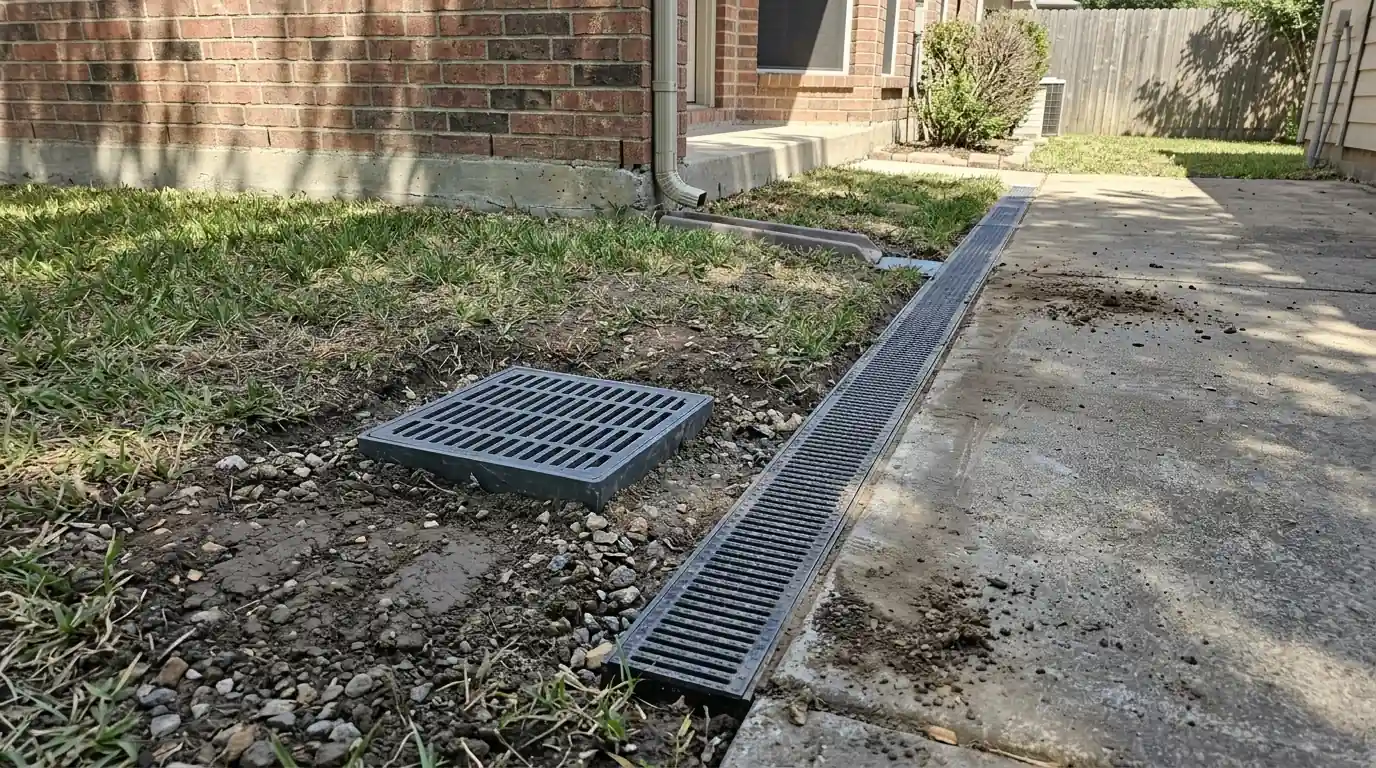
A catch basin is a box set in the ground with a grate on top. Water drops in, any debris settles in the box, and a pipe carries the water away. A channel drain is a long, narrow trench drain with a grate along its length, usually set across a driveway or along a patio edge.
Both only work if the water has somewhere lower to go. Before we dig, we shoot grades to see where the outlet can be. If the lot is flat, the answer may be a dry well, or a French drain that spreads water underground instead.
What decides the cost of a surface drain
We have no sourced Dallas price range for basins and channels alone, so these are the factors that set the price.
- 1Length of pipe to the outlet
The farther the water must travel, the more trench and pipe.
- 2Concrete cutting
Channels across drives need saw cuts and patching.
- 3Grate rating
Traffic-rated grates cost more than lawn grates.
- 4Number of inlets
Several basins can share one line.
- 5The outlet
Pop-up, curb outlet or daylight each take different work.
Low-spot catch basins
Every yard has a corner where water stands for a day after rain. A catch basin set at that low point, with its grate level with the finished grade, catches the water before it soaks the turf or creeps toward the slab. We size the box to the area it drains and add a sump below the outlet pipe so silt settles in the basin instead of the line.
Driveway channel drains
Driveways that slope toward the garage send water straight under the door. A channel drain cut across the bottom of the drive catches that sheet of water. We saw-cut the concrete, set the channel in a concrete bed so it will not shift, and choose a grate rated for car traffic, since a light-duty grate will crack under tires.
Patio drains
Patios that hold water, or slope back toward the house, can take a small square drain at the low point or a channel along the edge by the wall. On an existing patio we cut in the drain and patch around it; on a new one we set it before the pour so the slab falls toward it.
Tying in downspouts
A catch basin is a convenient place to collect a nearby downspout too. We run the downspout into the basin through a solid pipe, so roof water and surface water leave in one line. The pipe out of the basin is then sized for both flows.
Brands and product lines we install
Brands and product lines we install: Englert, Senox, Berger, OmniMax, Klauer, Mueller, Spectra, Gutterglove, MasterShield, Raptor, Flex-A-Spout, NDS, ADS, Zurn.
We install basins, grates and channels from makers like NDS and Zurn, with traffic ratings chosen for where each one sits.
What a surface drain job includes
- Grade check to find a real outlet
- Utilities located before digging
- Basin or channel set level with the surface
- Grates rated for foot or car traffic
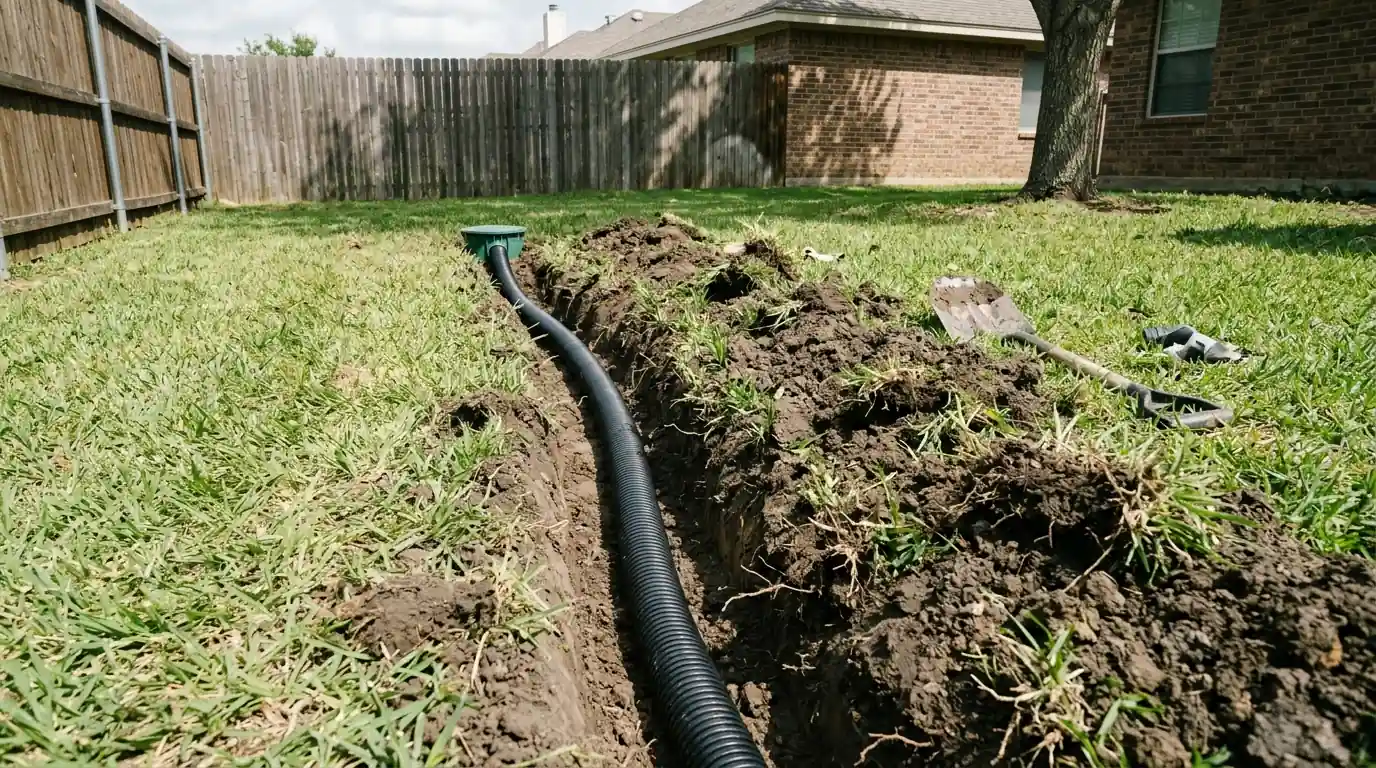
- Buried pipe sloped to the outlet
- Concrete cut and patched where needed
- A hose test through the whole run
Why Dallas yards flood in bursts
Dallas rain rarely arrives gently. DFW recorded 16.96 inches in May 2015, and in a month like that a driveway or patio sheds more water in an hour than the soil around it can take. That is why we size surface drains for the hard storms rather than the average day, and why the pipe out of the basin matters as much as the grate on top.
Signs you need a surface drain
- Standing water after rain
A puddle that is still there a day later.
- Water at the garage door
Rain running down the drive and under the door.
- Patio holding water
A patio that drains toward the house, or not at all.
- Dead turf in one spot
Grass that drowns in the same low area every spring.
- Silt lines on concrete
Mud lines showing where water stands and dries.
How a surface drain goes in
Find the water
We watch where it pools and shoot grades to the outlet.
Mark utilities
Lines are located before any digging.
Cut and dig
Concrete is cut where needed and the trench dug to slope.
Set and connect
Basins and channels set level and piped together.
Patch and test
Concrete or sod restored, then a hose test.
Catch basin and channel drain questions
A catch basin collects water at one low spot. A channel drain catches water along a line, such as across a driveway.
Yes, with a traffic-rated grate set in concrete. Light grates crack under tires.
Through buried pipe to a pop-up emitter, the curb or a lower part of the lot, depending on what your grade allows.
Yes. We cut in the drain at the low point and patch the concrete around it.
The basin sump catches silt and leaves, so lift the grate and scoop it out once or twice a year.
Often, yes. We pipe them in and size the outlet for both.