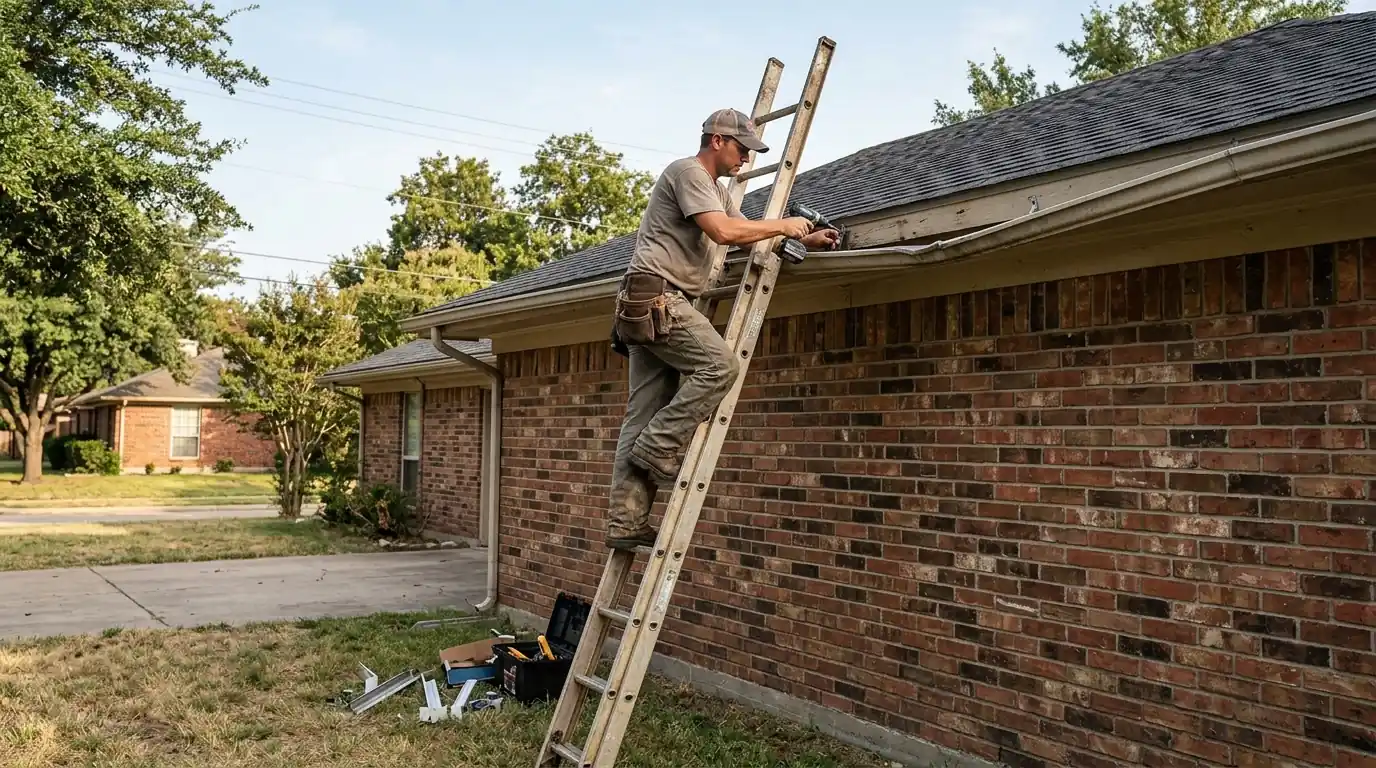
Short answer. Sagging gutter repair in Dallas usually means replacing old spikes or failed hangers with hidden hangers screwed into the fascia at closer spacing, then resetting the pitch. If the board behind the gutter is soft, that gets replaced first. Most sagging runs are fixed in a few hours.
Why gutters sag
Older gutters often hang on spike and ferrule fasteners, long nails driven through the gutter into the fascia. Every hot day and every load of wet leaves works them loose. Newer gutters use hidden hangers with screws, but even those pull out when they are spaced too far apart or the wood behind them softens.
Whatever the cause, a sag becomes a low spot, a low spot holds water, and the extra weight makes the sag worse. Fixing it early is a rehang; leaving it can mean fascia repair and sometimes a new gutter.
What decides the cost of a sag repair
We have no sourced price range for sag repairs, so these are the factors that set yours.
- 1Length of sag
One stretch or the whole run.
- 2Fastener type
Swapping old spikes for hangers takes more time than tightening hangers.
- 3Fascia condition
Soft wood must be repaired first.
- 4Gutter condition
Bent sections may need replacing.
- 5Height
Second-story runs need more setup.
Hidden hanger replacement
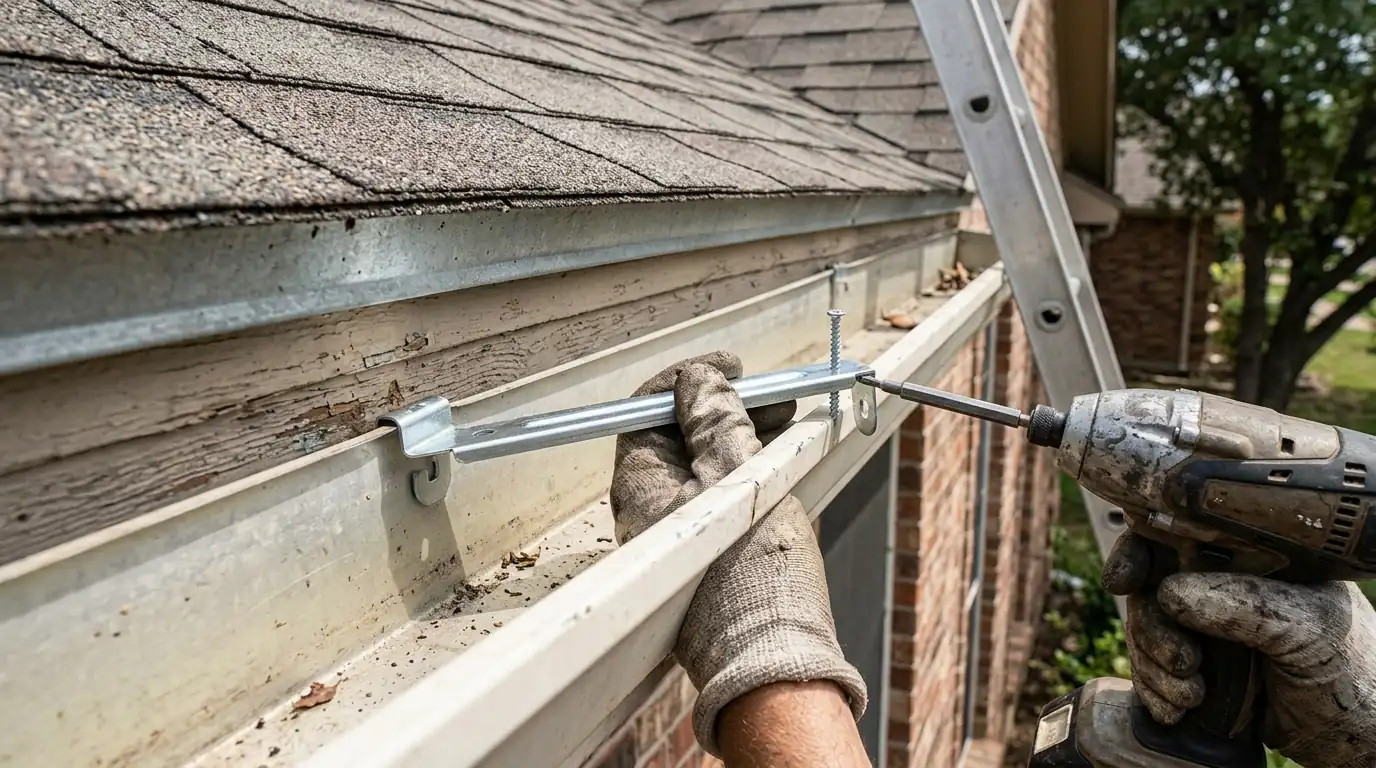
Hidden hangers clip inside the front lip of the gutter and screw into the fascia, out of sight. We replace bent or loose ones and add more so they sit about every two feet, closer on runs under heavy trees. Screws bite into sound wood far better than nails, which is why this fix lasts.
Spike and ferrule swaps
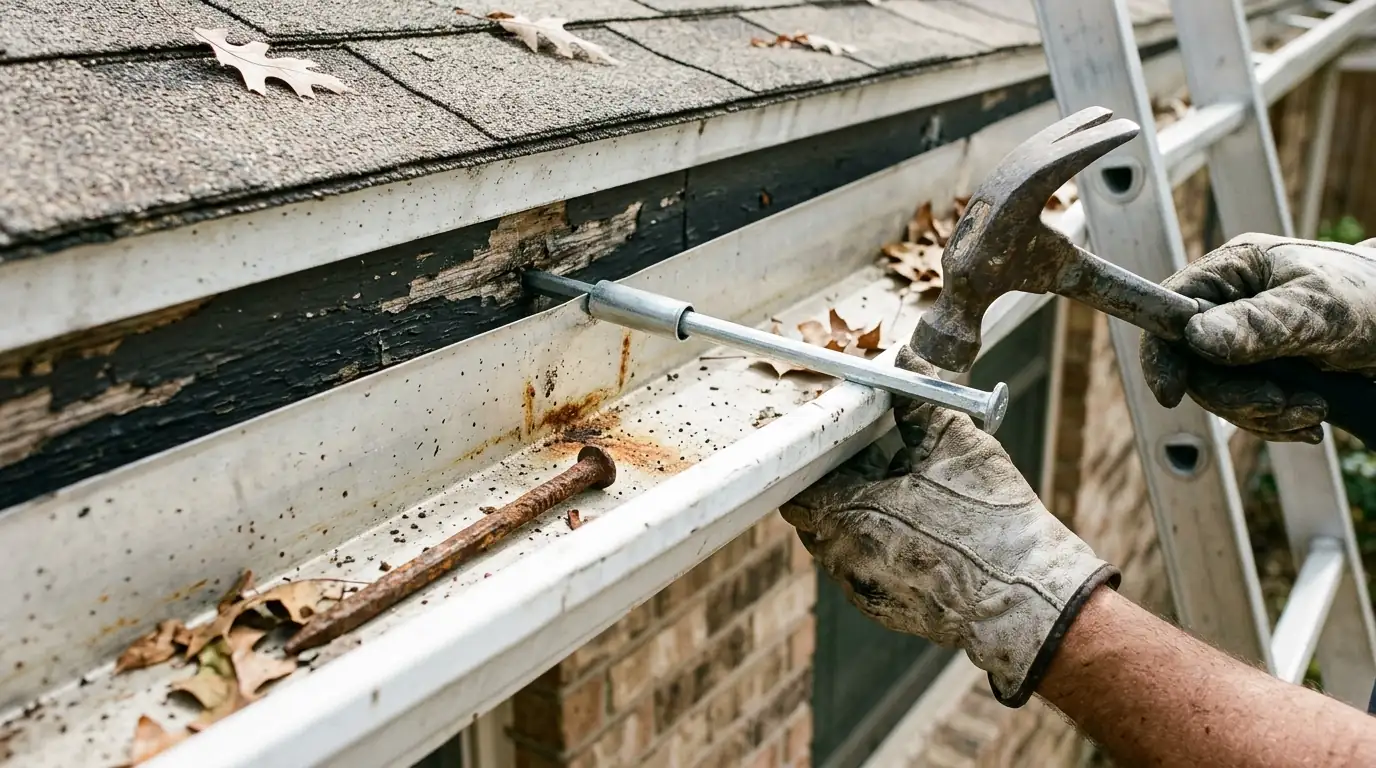
Spikes slowly back out of the wood, and each loose one lets the gutter drop a little. We pull them and replace them with hidden hangers, patching the old holes in the gutter face so they do not leak. It is the most common sag repair on older Dallas homes.
Fascia pull-away
When the gutter has pulled the top of the fascia away from the rafters, or the fasteners have nothing to grip, the wood is the problem. We repair or replace the soft section before rehanging, so the new hangers have solid wood to hold.
Overloaded runs
A gutter full of wet leaves and standing water weighs far more than an empty one. If a run sags because it is always full, we clear it, rehang it, and look at why it fills: a clogged outlet, a missing downspout or a canopy that calls for guards.
Sagging gutters under big Dallas trees
Sags are most common where gutters carry the heaviest loads. Preston Hollow is known for its big trees, and runs under that kind of canopy fill with wet leaves and catkins that add weight between every hanger. There we space hangers closer than the usual two feet and often suggest guards, so the run is not carrying a trough of wet debris every spring.
Signs your gutter is sagging
- A visible dip
The gutter line droops between fasteners.
- Spikes backing out
Nail heads standing proud of the gutter face.
- Gap at the fascia
Daylight between the back of the gutter and the board.
- Overflow in one spot
Water spilling at the low point in storms.
- Water standing in the trough
Pooled water a day after rain.
How long a sag repair takes
A single sagging run is usually rehung in two to three hours. Whole-house hanger replacement, or runs where the fascia needs repair first, can take a full day. We tell you on the walk-around which it will be.
How we fix a sagging gutter
Find the sag
A level and a hose show where the run drops.
Clear the trough
Debris and standing water come out first.
Check the wood
Soft fascia repaired before rehanging.
Rehang
Hidden hangers screwed in at close spacing.
Reset and test
Pitch reset and water run to the outlet.
Sagging gutter questions
Usually loose spikes, too few hangers, soft fascia, or a run that is always full of wet debris.
Usually yes. Rehanging on hidden hangers at proper spacing fixes most sags.
About every two feet is common, closer under heavy trees.
It can pull loose in a storm, and the water it spills can soak the fascia and foundation.
Yes, with hidden hangers and screws, and we seal the old holes.
A single run is usually a few hours.