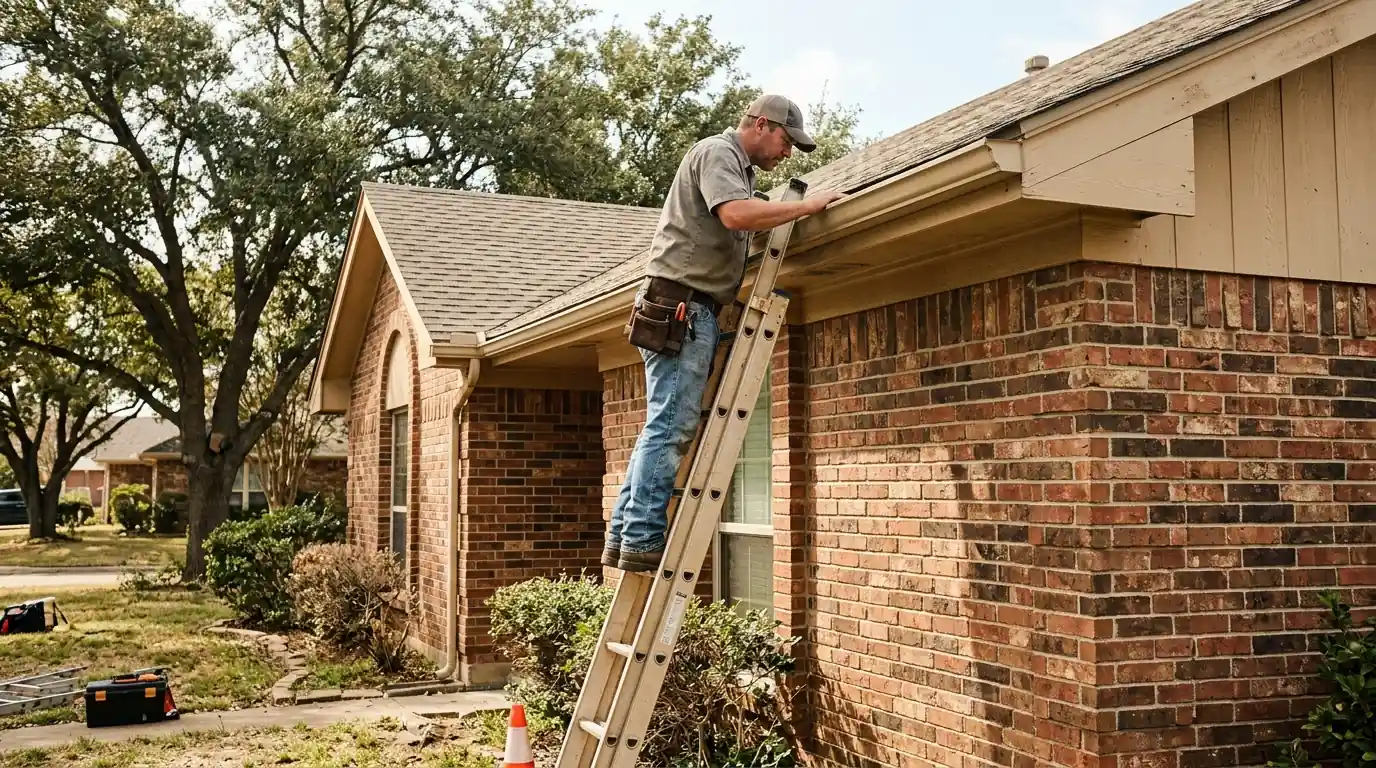
Short answer. A gutter inspection in Dallas covers every run, hanger, joint and outlet, the fascia and drip edge behind them, and where each downspout lets out. It usually takes under an hour on a typical house, and you get photos of anything worth fixing. It is most useful after hail and before buying a home.
What an inspection is for
An inspection answers one question: what will fail next? Loose hangers, a corner starting to drip, a soft spot in the fascia or a downspout dumping against the slab are each small now. We find them, photograph them and tell you which ones matter.
It is not a sales visit. If everything is sound, you hear that. If something needs work, you get a plain list, and you decide whether to have us do it, do it yourself, or wait. Inspections pair naturally with a cleaning, since a clean trough shows more.
What every inspection covers
- Every gutter run checked for dents, sags and pitch
- Corners, end caps and outlets checked for leaks
- Hangers and fasteners checked for looseness
- Fascia and drip edge probed behind the gutter
- Every downspout followed to its outlet
- Extensions and buried lines checked for flow
- Photos and a plain written summary
After a storm
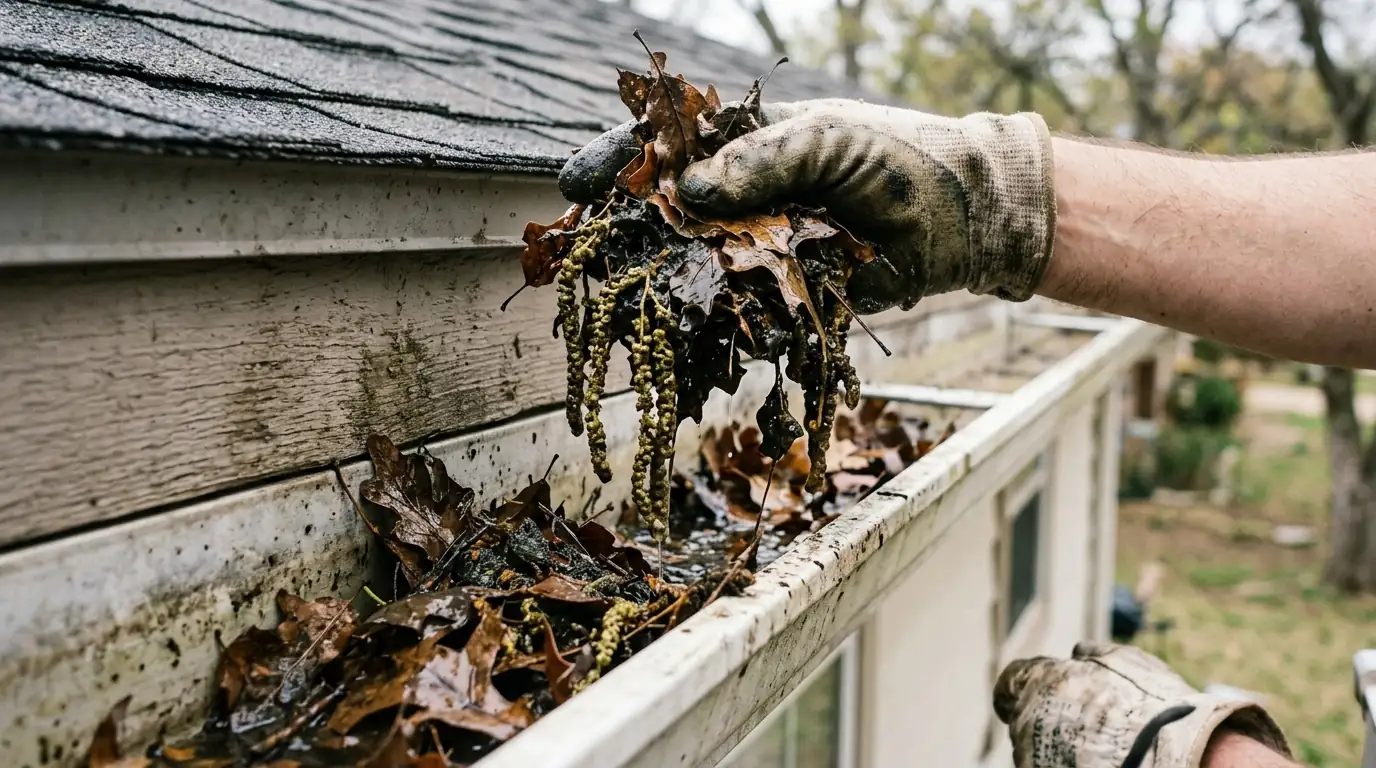
After hail or high wind, we look for dents along the front edge, crushed downspouts, lifted sections and hangers pulled loose. We photograph each one before anything is touched, which is the record an adjuster wants to see. Damage on gutters is often a sign of damage on the roof above, so we note where a roofer should look too.
Before you buy a house
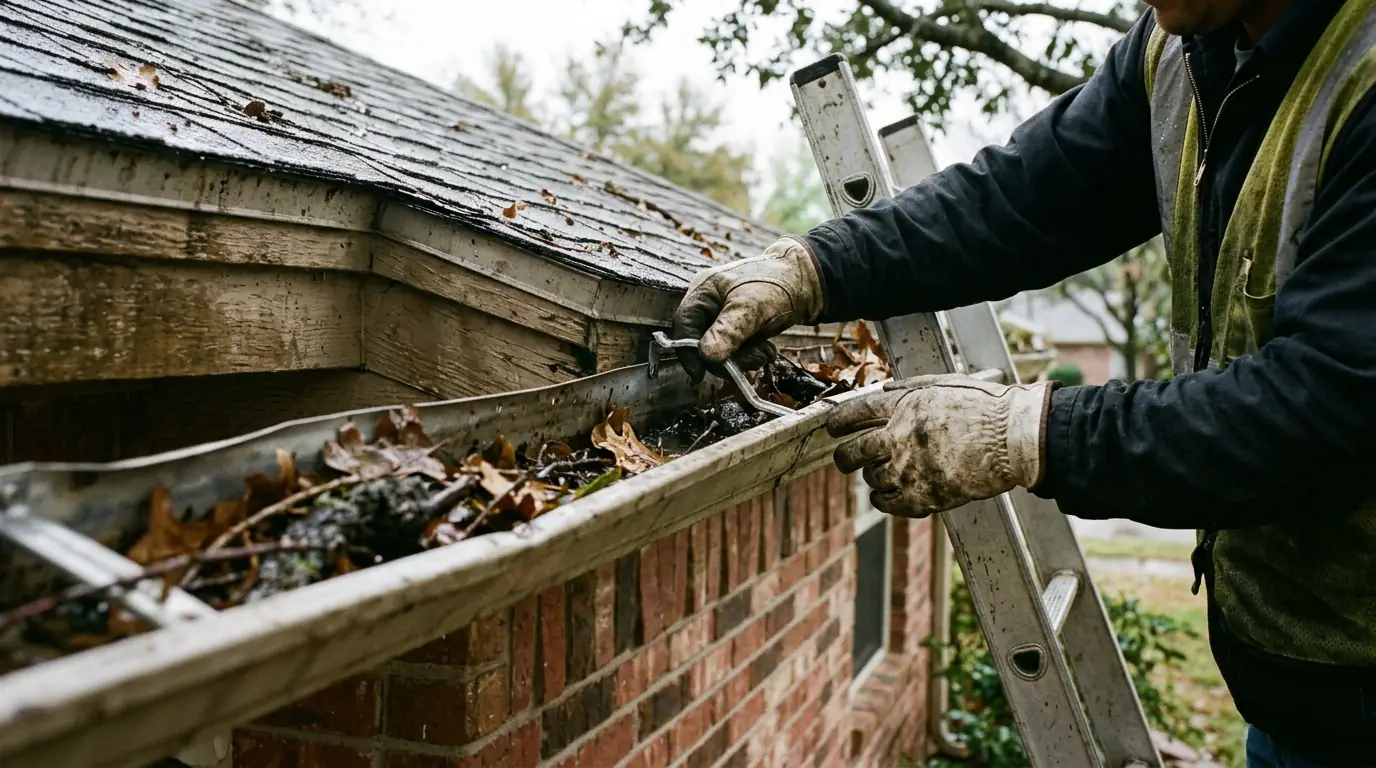
A home inspection usually glances at gutters from the ground. We go up. Buyers get a list of what the gutters and drainage need, with photos, so they can price it into the offer. Overflow stains, rot behind the gutter and downspouts that empty against the foundation all point to costs a buyer should know about.
Annual check
Once a year, ideally before the spring storms, a quick inspection catches loose fasteners and dried-out sealant before they become leaks. On homes under big trees we pair it with a cleaning so the trough can actually be checked.
Drainage at the slab
The gutter is only half the system. We follow every downspout to where it lets out, check extensions and buried lines, and look at whether the ground slopes away. Water pooling at the foundation is the most expensive problem a gutter system can cause, so it gets the most attention.
Why Dallas gutters need storm-season checks
FEMA's National Risk Index rates Dallas County Very High overall, with hail and tornado among its top hazards. That makes the inspection after a big storm the one that matters most here: dents and pulled hangers from hail are easy to miss from the lawn, and a gutter that looks fine from the ground can be holding water or tipping toward the fascia by the next downpour.
How an inspection goes
Ground walk
We look at the whole roofline and drainage from the yard.
Up the ladder
Every run, joint, hanger and outlet checked up close.
Probe the boards
Fascia and drip edge checked for soft spots.
Follow the water
Each downspout traced to where it lets out.
Report
Photos and a plain list of what needs attention.
Signs it is time for an inspection
- A hailstorm just passed
Dents and crushed downspouts are easy to miss from the ground.
- You are buying a home
Gutters and drainage are a common hidden cost.
- Overflow you cannot explain
Clean gutters that still spill in storms.
- Stains on the soffit
Water marks under the roof edge.
- New cracks inside
Cracks near a corner can trace back to a downspout.
What decides the cost of an inspection
We have no sourced Dallas range for inspections alone, so these are the factors that set yours.
- 1House size
More runs and downspouts take longer.
- 2Stories
Second-story runs need more ladder work.
- 3Paired services
Inspecting during a cleaning saves a separate trip.
- 4Storm documentation
Detailed photo sets for a claim take more time.
- 5Buried drains
Testing buried lines adds time.
Gutter inspection questions
Under an hour on most single-family homes, longer with buried drains or a second story.
Yes. Every problem we note is photographed.
Often, yes. It shows the costs a ground-level home inspection can miss.
Yes. We document the damage before anything is moved.
Small things can be fixed on the spot if you want. Anything bigger is quoted separately.
Yes, and it is the best way to see the trough clearly.