Short answer. An underground downspout drain is solid pipe that carries roof water from a downspout to an outlet. A French drain is perforated pipe in gravel that collects water already in the soil. If water comes off the roof, bury the downspout. If the yard stays soggy after rain, add a French drain. Many Dallas yards need both, side by side.
Two different problems
Roof water arrives in a concentrated stream at each downspout, fast and all at once. The job is to carry it somewhere without letting it soak in near the house. That calls for smooth, solid pipe sloped to an outlet.
Ground water is spread out. It is the water that soaks into a low part of the yard, or moves downhill through the soil toward a foundation. The job is to collect it along a line, which calls for perforated pipe surrounded by gravel and filter fabric.
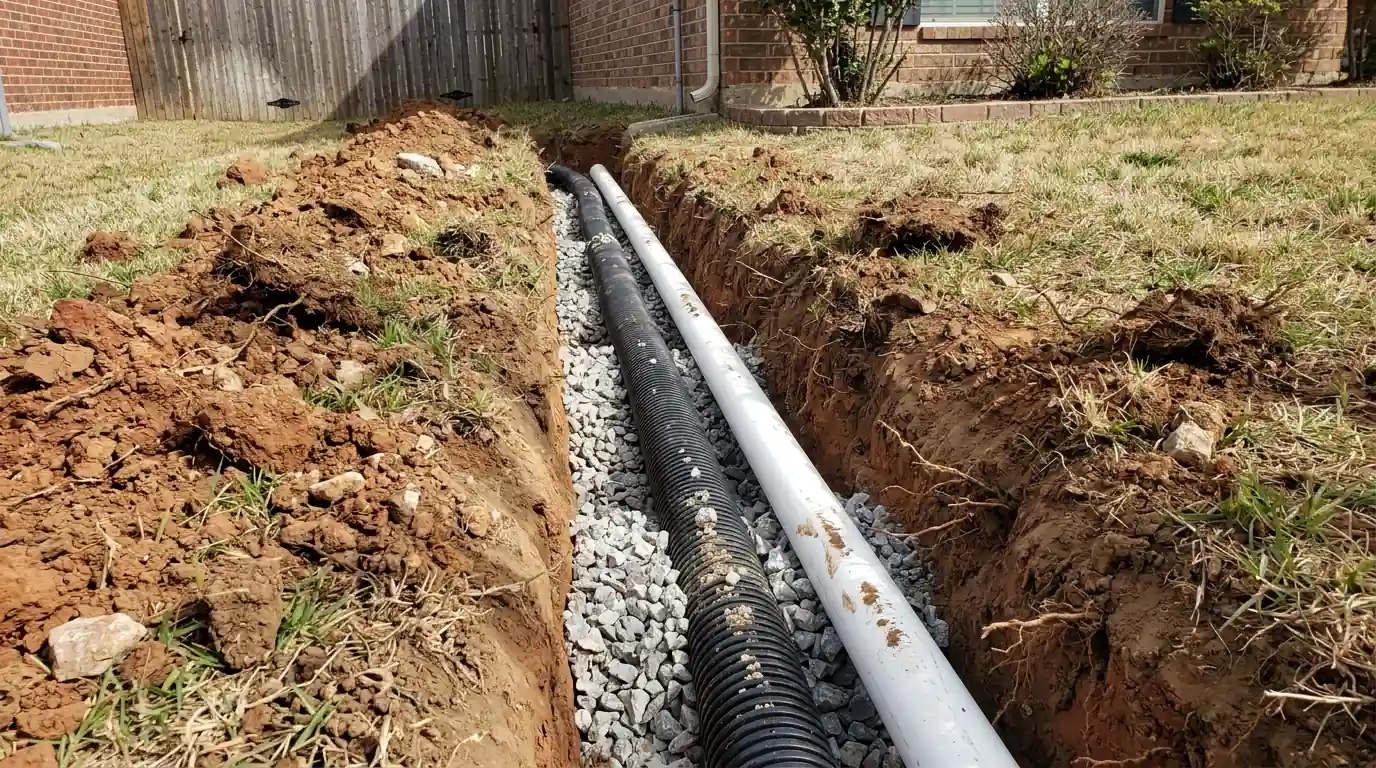
Side by side
| Underground downspout drain | French drain | |
|---|---|---|
| Water it handles | Roof water from downspouts | Water already in the soil |
| Pipe | Solid, smooth-wall or corrugated | Perforated, in gravel and fabric |
| Where it goes | From downspout to outlet | Along a wet area or slope |
| Typical cost | $200 to $1,400 for a 20 to 40 foot run (UseCalcPro) | $10 to $65 per foot (LawnStarter); most projects $2,800 to $6,500 (Lawn Love) |
| Clog risk | Roof grit and leaves, cleared via a cleanout | Soil fines, prevented by fabric |
Why roof water should not go into a French drain
It is tempting to tie downspouts into a French drain and call it done. The trouble is that a downspout can deliver more water in a storm than a gravel trench can take, and it brings roof grit and leaf fragments that clog the gravel. The perforated pipe also lets roof water seep out along the way, which can put it right back into the soil you were trying to dry.
The better layout is two pipes in the same trench or side by side: solid pipe for the downspouts, perforated pipe for the ground water, both running to the same outlet.
Why it matters more on Dallas clay
Dallas sits on Blackland Prairie clay that swells when wet and shrinks when dry, and the city's soils are largely Houston Black clay, which makes foundations prone to shifting. That makes even moisture around the slab the goal. Roof water concentrated at one corner works against that, and so does ground water that collects on the uphill side of a house.
The outlet decides everything
Both systems fail the same way: nowhere for the water to go. Before any digging, we find the outlet:
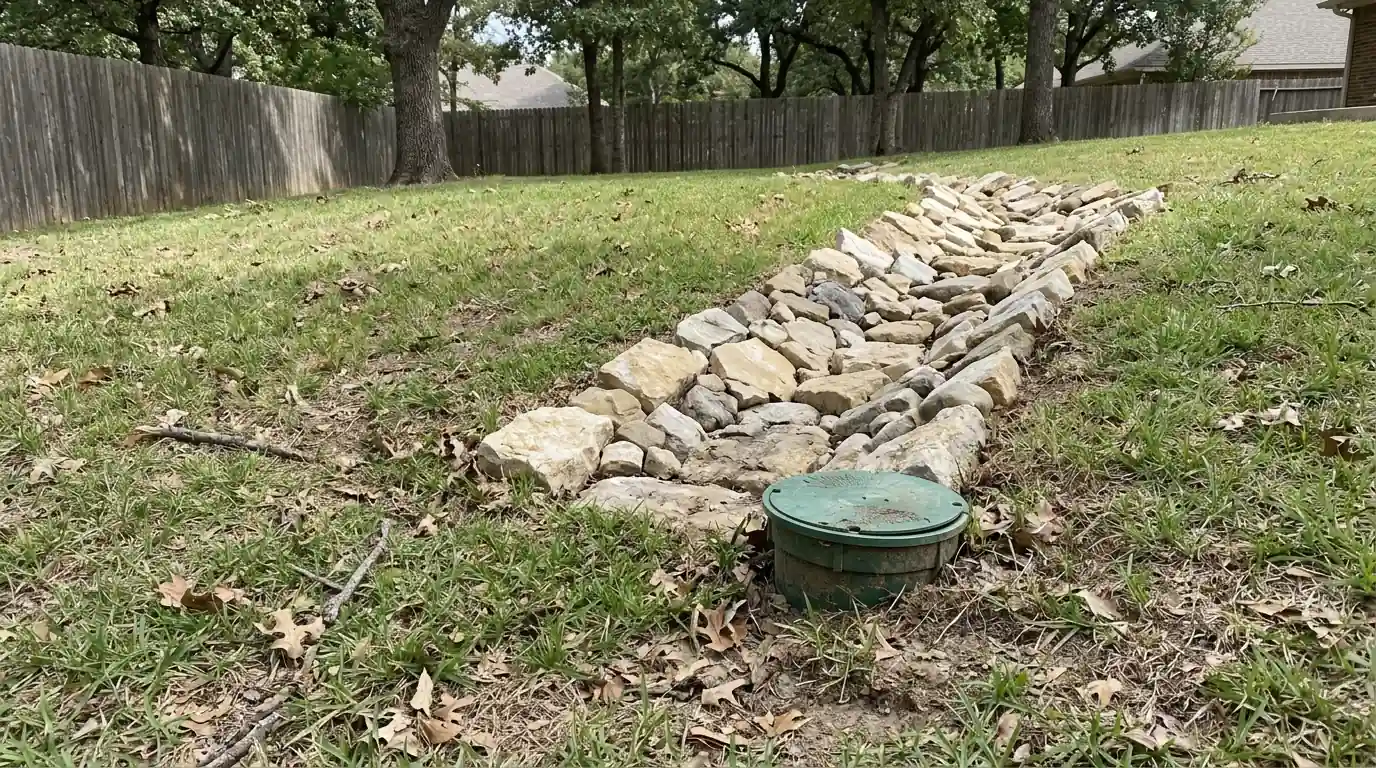
- Daylight onto lower ground, protected by a rock apron.
- A pop-up emitter in the lawn on a yard that slopes away.
- A curb outlet to the street, where the city allows it.
- A dry well on a flat lot, sized for the roof area; dry wells run about $500 to $3,000 (LawnStarter).
How to tell which you need
Watch your yard during and after a heavy rain. If water pours from a downspout and pools beside the house, you need the downspout carried away. If the lawn stays squishy for days in one area, or water seeps across the yard from higher ground, you need a French drain. If you see both, plan both, and lay them so they share an outlet.
Drainage services we install
French drain and downspout drain questions
Better not. Roof water overloads the trench and clogs the gravel. Run downspouts in solid pipe beside it.
A buried downspout line is usually cheaper than a French drain of the same length.
Yes, with filter fabric and a proper outlet. Clay drains slowly, so the pipe does the work.
A dry well or a curb outlet can serve as the outlet for either system.
Sources for this guide
- French drain and dry well costs, LawnStarter
- French drain costs, Lawn Love
- French drain and downspout tie-in costs, UseCalcPro
- Foundation plants for DFW homes, Dallas County Master Gardeners
- Texas soil and foundations, PermaPier
Figures are national or regional planning numbers from the sources above, not a quote for your home.