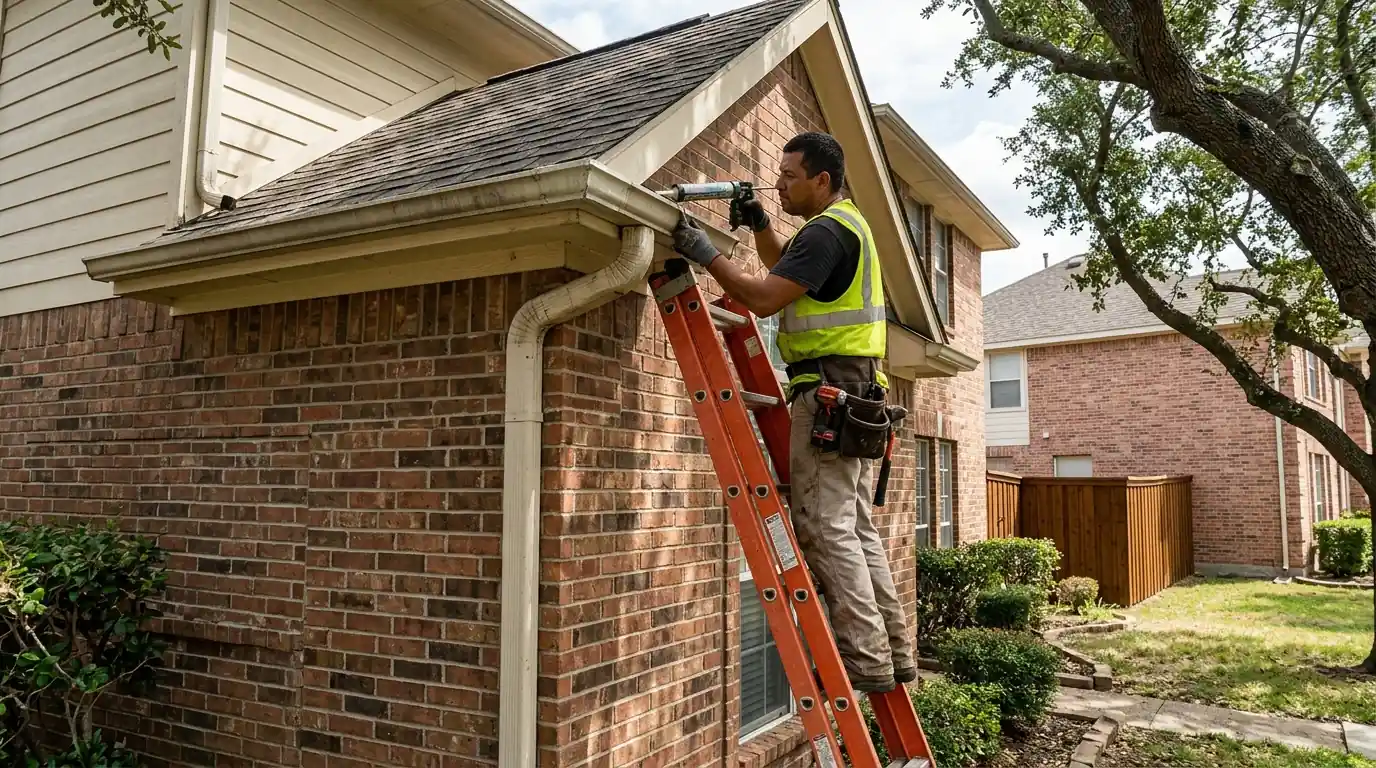
Short answer. Gutter leak repair in Dallas usually takes under two hours: we find the failed joint, scrape out the old sealant, clean the metal and reseal it with gutter sealant rated for outdoor heat. Corners and end caps are the usual culprits. If the metal around the joint is rusted through, we replace that piece instead of caulking over it.
Why gutters start dripping
A seamless run has no joints along its length, but it still has corners, end caps and outlets. Each one is sealed at the factory or on the job, and that sealant ages. Summer heat, winter cold snaps and the weight of wet leaves all work on it.
Caulking over the top of an old leak rarely lasts. The old sealant has to come out first so the new bead bonds to clean metal. That is the part most quick fixes skip, and it is why the same corner starts dripping again a few months later. If the drip is really a sag pulling the joint apart, rehanging the run comes first.
What decides the cost of a leak repair
Leak repairs are priced by the joint, not by the foot. These are the things that move the number.
- 1How many joints
One corner is a short visit; a run of tired seams takes longer.
- 2Height
Second-story corners need longer ladders and more setup.
- 3Metal condition
Rusted or torn pieces get replaced, not sealed.
- 4Hidden sag
A joint pulled apart by a sag needs the run rehung first.
- 5Access
Steep landscaping, decks or a pool under the run add time.
Corner miters
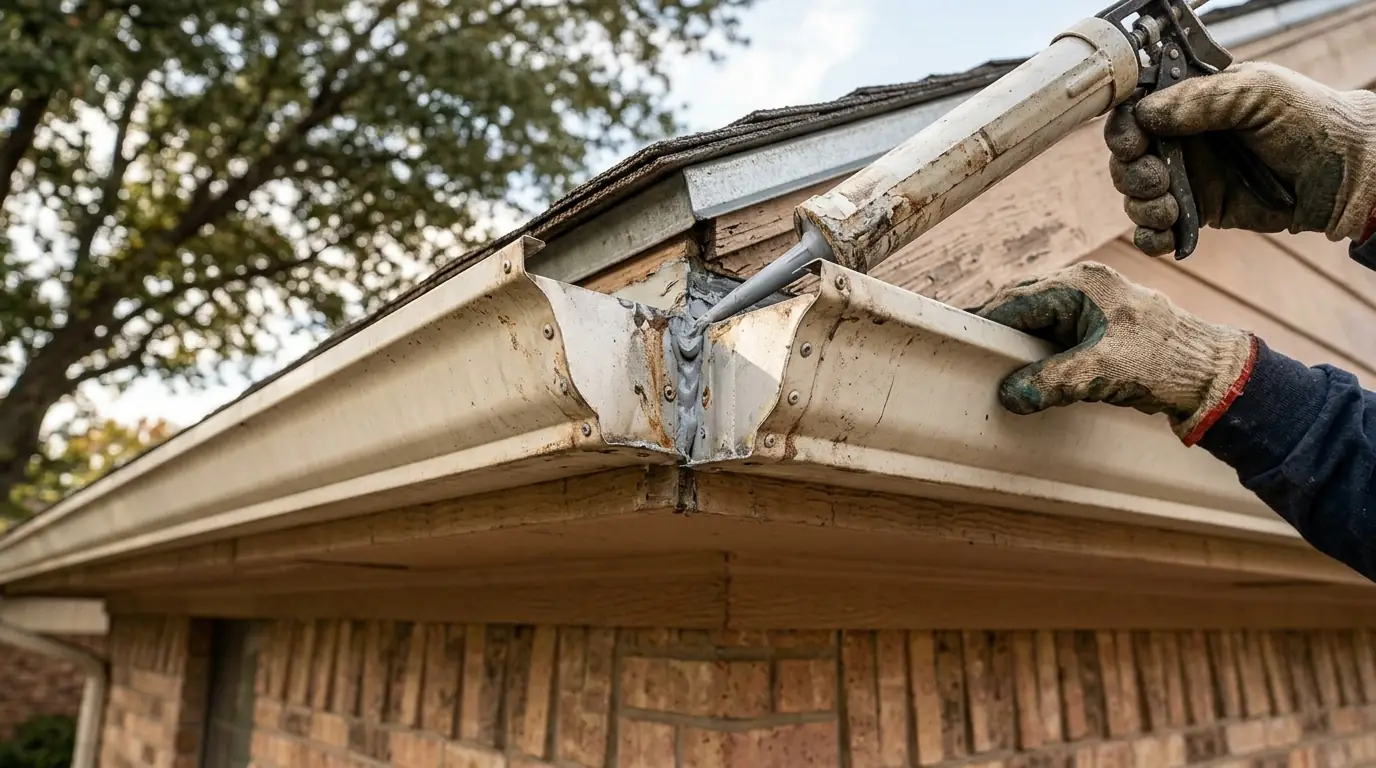
Inside and outside corners are the most common leak on a Dallas house. A miter is two pieces of gutter cut and joined at an angle, with rivets and sealant holding it together. When the sealant cracks, water runs along the joint and drips at the corner, often right onto a walkway or flower bed. We drill out loose rivets if needed, clean the joint, reseal it inside and out, and re-rivet so the corner stays tight.
Seams on sectional runs
Older sectional gutters come in 10 or 20 foot lengths joined with slip connectors. Every connector is a possible leak. We reseal sound seams, but if a run has several failing joints, we will show you why a new seamless run usually costs less over a few years than resealing it every season.
End caps
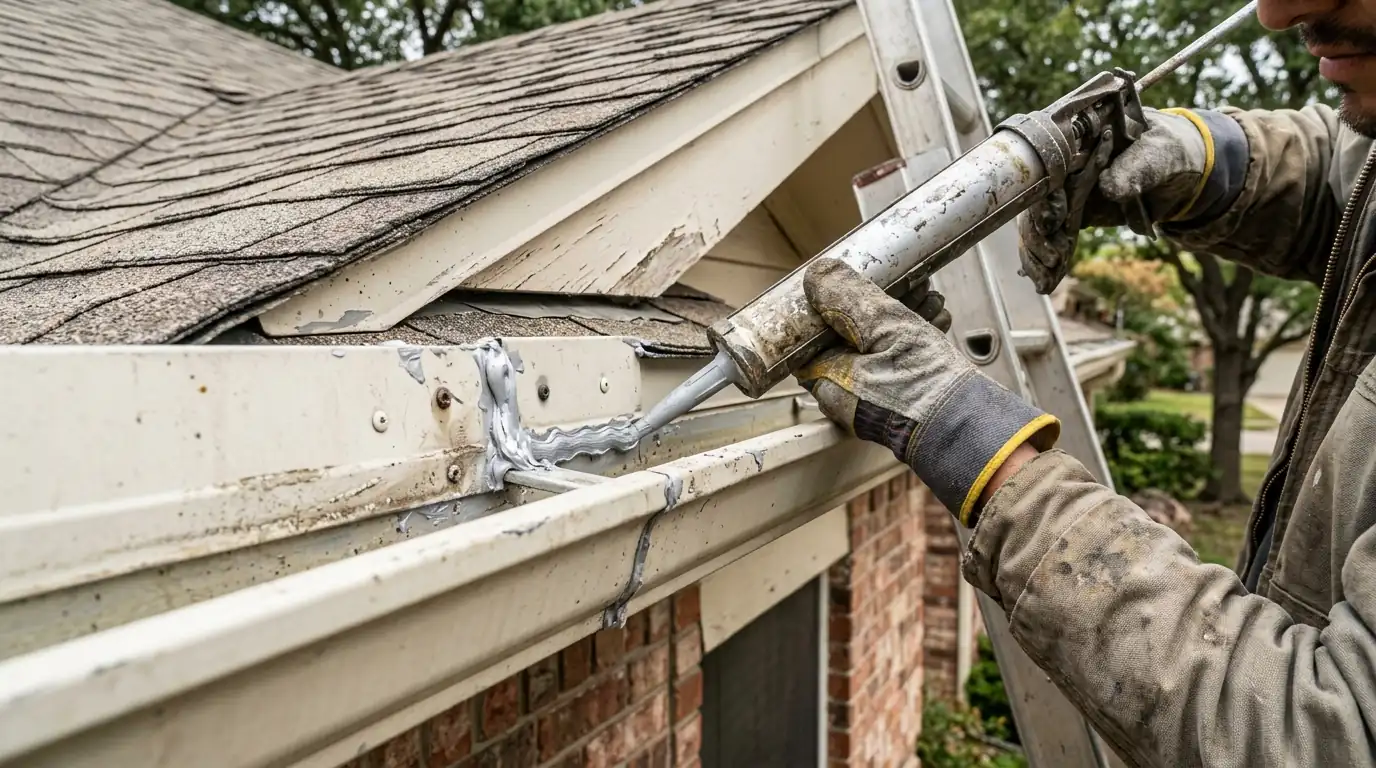
End caps close off the ends of a run. They leak when the sealant dries out or the cap gets knocked loose by a ladder or a branch. A loose cap can also let water pour off the end of the gutter in a storm. We crimp or replace the cap, then seal it from the inside.
Outlet drops
The outlet is the short tube where the gutter empties into the downspout. If its flange is not sealed, water runs around it and drips down the outside of the downspout. We reseal the flange, and if the outlet has torn or rusted, we cut in a new one.
Why corners leak on older Dallas rooflines
Corner leaks are the most common call we get from the M Streets, where building began in 1923 and Tudor Revival homes with steep, intersecting gables make up most of the houses. Those rooflines mean short gutter runs with many inside and outside corners, so there are more joints to fail. Dallas summers add to it: July highs average near 96 degrees, and sealant that bakes on dark metal every afternoon dries and cracks sooner.
What you can patch and what needs us
Reasonable to try
- Reseal a single end cap you can reach from a short ladder
- Clear leaves so you can see where the drip starts
- Note which corners drip in which storms
Better left to us
- Any joint on a second story
- Corners that leak again after caulking
- Rusted joints that need a new piece
Signs a gutter joint has failed
- Drips at a corner
Water falling from one spot at a corner, even after the rain stops.
- Streaks on brick
Dark vertical streaks or white mineral lines under a joint.
- Wet fascia
Peeling paint or soft wood right behind a corner or outlet.
- Splash marks in beds
A dug-out line of mulch or soil under the same point every storm.
- Rust spots on steel
Orange staining around a joint on older steel gutters.
How we fix a leaking gutter
Find the drip
We run water down the gutter to see exactly which joint is failing.
Strip the old seal
Old sealant and loose rivets come out so the metal is bare.
Clean and dry
The joint is cleaned of grit and oxidation so new sealant bonds.
Reseal and rivet
Fresh gutter sealant inside and out, with new rivets where needed.
Test it
We run water again and watch the joint before we leave.
Gutter leak questions
Usually yes. Most leaks are a single joint that can be cleaned and resealed. We only replace a section when the metal is rusted or torn.
Caulk over old sealant does not bond well. The old material has to come out first.
Not usually, but water dripping beside the slab or behind the fascia does damage over time, so it is worth fixing before the next storm season.
Yes, though if many seams are failing we will show you the cost of resealing against a new seamless run.
One or two joints is usually under two hours on site.
Yes. The phone is answered 24/7, and if water is getting inside we can talk through what to do right away.