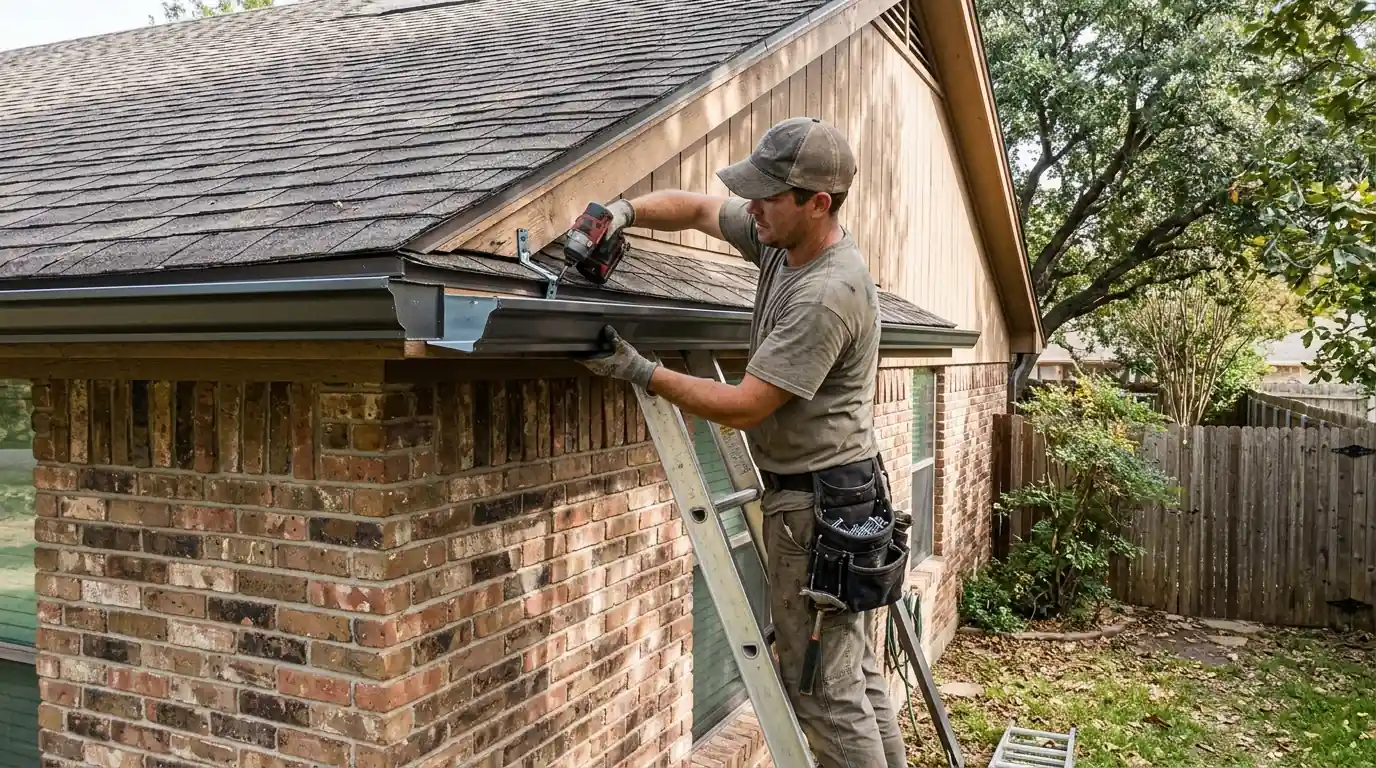
Short answer. Steel gutters in Dallas are usually Galvalume, steel coated with an aluminum-zinc alloy, formed in K-style runs. They resist dents better than thin aluminum but weigh more and can rust at scratched or cut edges. National guides put galvanized or coated steel gutters at about $10 per linear foot installed.
Is steel right for your house?
Steel's appeal is stiffness. A Galvalume gutter shrugs off a ladder lean or small hail that would dent thin aluminum, and its bare metal look suits standing-seam and metal roofs. It costs a little more than aluminum and needs heavier hangers.
Its weak spot is the coating. Where the metal is cut, scratched or drilled, steel can rust if the edge is left bare. That is why careful handling and sealed cut edges matter more here than on aluminum runs.
Galvalume steel compared with aluminum
| Galvalume steel | Aluminum | |
|---|---|---|
| Dent resistance | Higher | Lower |
| Weight | Heavier | Lighter |
| Rust | Possible at cut or scratched edges | Does not rust |
| Best for | Hail-prone streets, metal roofs | Most homes |
What decides the cost of steel gutters
Steel is priced by the foot, a little above aluminum.
- 1Linear footage
Total length of runs.
- 2Gauge and finish
Heavier gauge and painted finishes cost more.
- 3Hangers
Heavier-duty hangers for the weight.
- 4Downspouts
Matching steel downspouts.
- 5Old gutters and fascia
Tear-off and fascia repair first.
National cost guides put galvanized or coated steel gutters at about $10 per linear foot installed (RoofingCalc). This is a planning range, not our quote.
Galvalume K-style
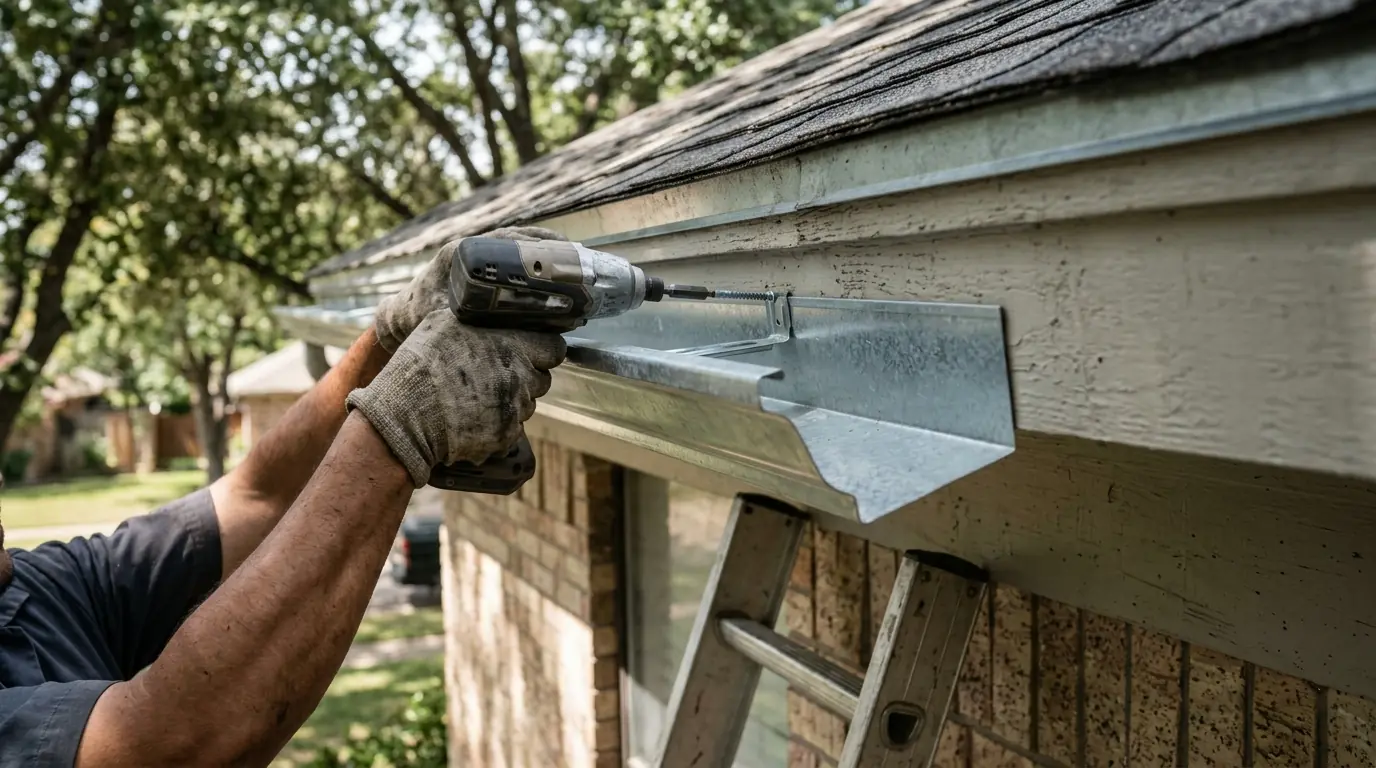
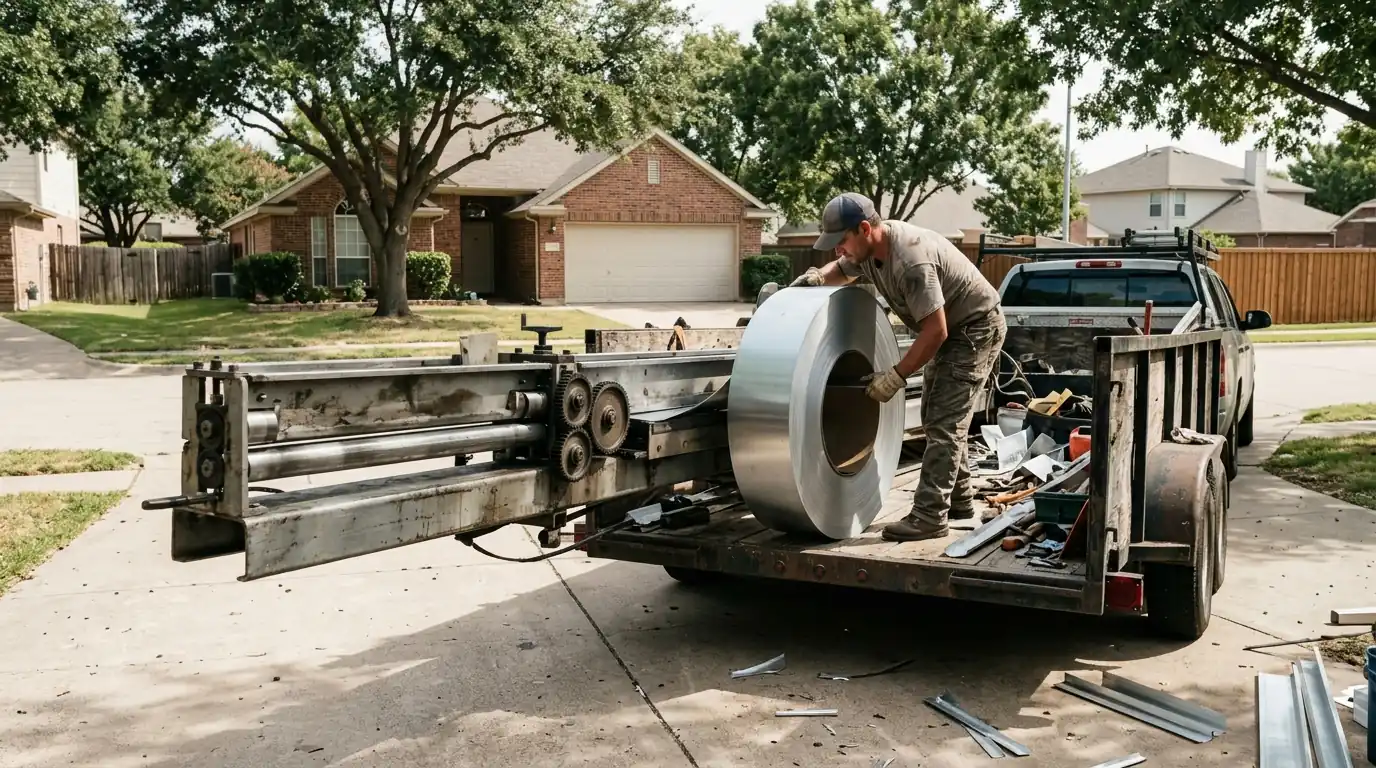
Galvalume coil forms the same K-style profile as aluminum, in bare metal or painted finishes. Runs are hung on hangers rated for the extra weight, spaced a little closer than on aluminum, and sealed at corners and outlets with sealant suited to steel.
Hail-prone roofs
Heavier gauge steel resists the small and medium hail that dents aluminum gutters along the front lip. No gutter survives the largest stones, but on streets that take hail most springs, stiffer metal means fewer dented runs to replace.
Matching metal roofs
On homes with standing-seam or metal panel roofs, Galvalume gutters match the roof's look and expand at a similar rate. We coordinate with the roof's edge trim so the gutters sit cleanly under it.
Cut-edge care
Every cut end, outlet hole and screw hole exposes bare steel. We keep cuts clean, seal cut edges and avoid dragging steel across steel during install. Mixing steel with copper parts is avoided, since the two metals corrode each other.
What a steel gutter install includes
- Hangers rated for steel's extra weight
- Runs formed from Galvalume coil
- Cut edges and outlet holes sealed
- Corners and outlets sealed with steel-suited sealant
- No contact with copper parts
- Downspouts matched to the runs
- A hose test of every run
Steel gutters for hail country
Steel makes the most sense where hail keeps coming back. In Wylie, the April 11, 2016 storm affected about 80 percent of homes, caused over $300 million in damage and set a 5.25 inch hailstone record for the NWS Fort Worth area. No gutter survives stones that size, but on streets that take smaller hail most springs, stiffer steel means fewer dented runs to replace.
How a steel install goes
Choose the finish
Bare Galvalume or painted, matched to the roof.
Prepare the edge
Old gutters off, fascia checked.
Form and cut
Runs formed, cuts kept clean.
Hang and seal
Heavy hangers, sealed corners and cut edges.
Test
Hose test and a check for any bare scratches.
Steel gutter questions
Stiffer and more dent-resistant, but heavier and able to rust at bare edges. Aluminum suits most homes.
Steel coated with an aluminum-zinc alloy that protects it from corrosion.
They can at cut or scratched edges if left bare, which is why we seal them.
They resist small and medium hail better. Very large hail dents any gutter.
Yes, and they match the look of standing-seam and panel roofs.
No. The two metals corrode each other, so we keep them apart.