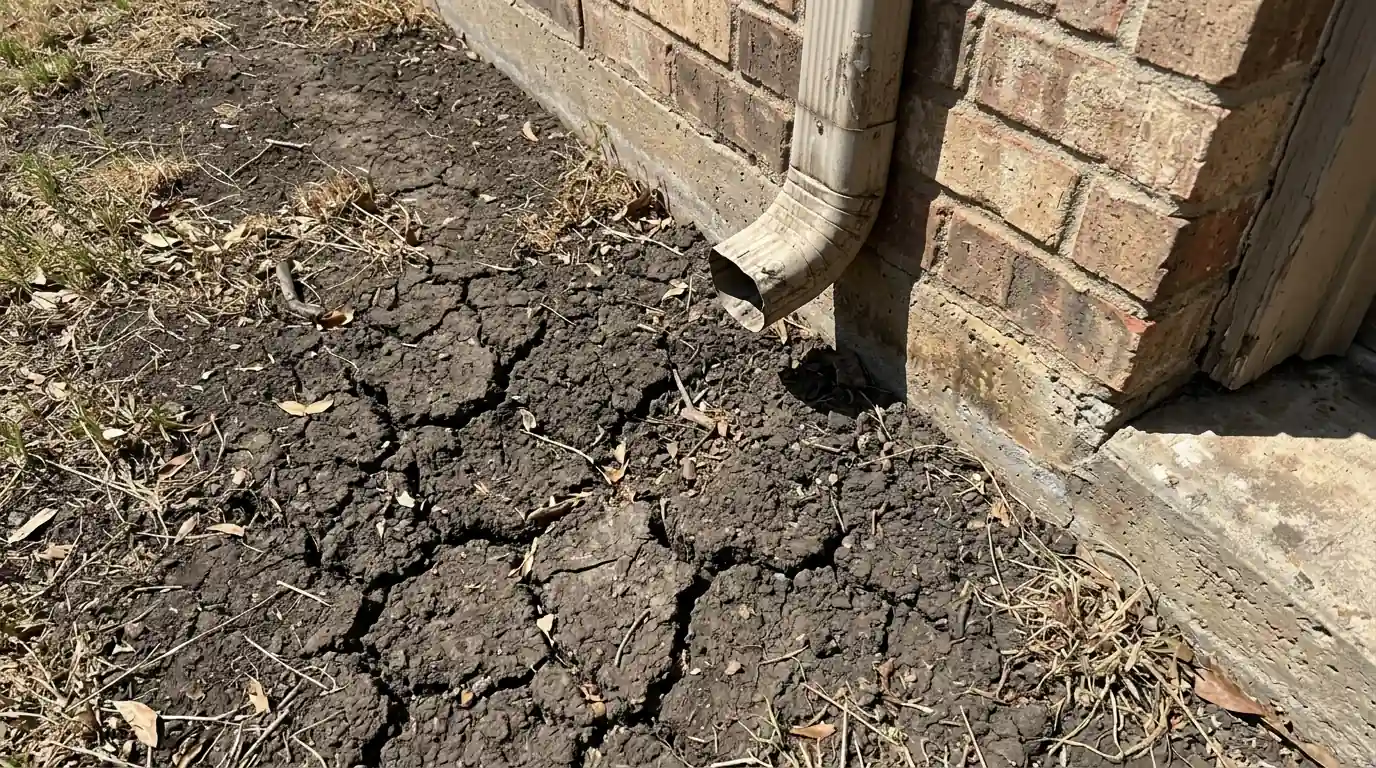
Short answer. Dallas sits on Blackland Prairie clay that swells when wet and shrinks and cracks when dry. A downspout that empties against the foundation keeps one corner wetter than the rest, which is the uneven moisture that moves slabs. Common guidance is to carry roof water 4 to 6 feet away, onto ground that slopes away from the house.
Why clay changes the question
Dallas and Fort Worth sit in the Blackland Prairie, whose expansive black clay swells when it absorbs water and shrinks and cracks when it dries. Dallas soils are largely clay, particularly Houston Black clay, which makes foundations prone to shifting.
A roof collects a lot of water and a downspout delivers it to one spot. When that spot is the soil beside the slab, one corner of the house stays wetter than the others. The problem is not the water itself so much as the difference between wet and dry sides.
How far the water needs to go
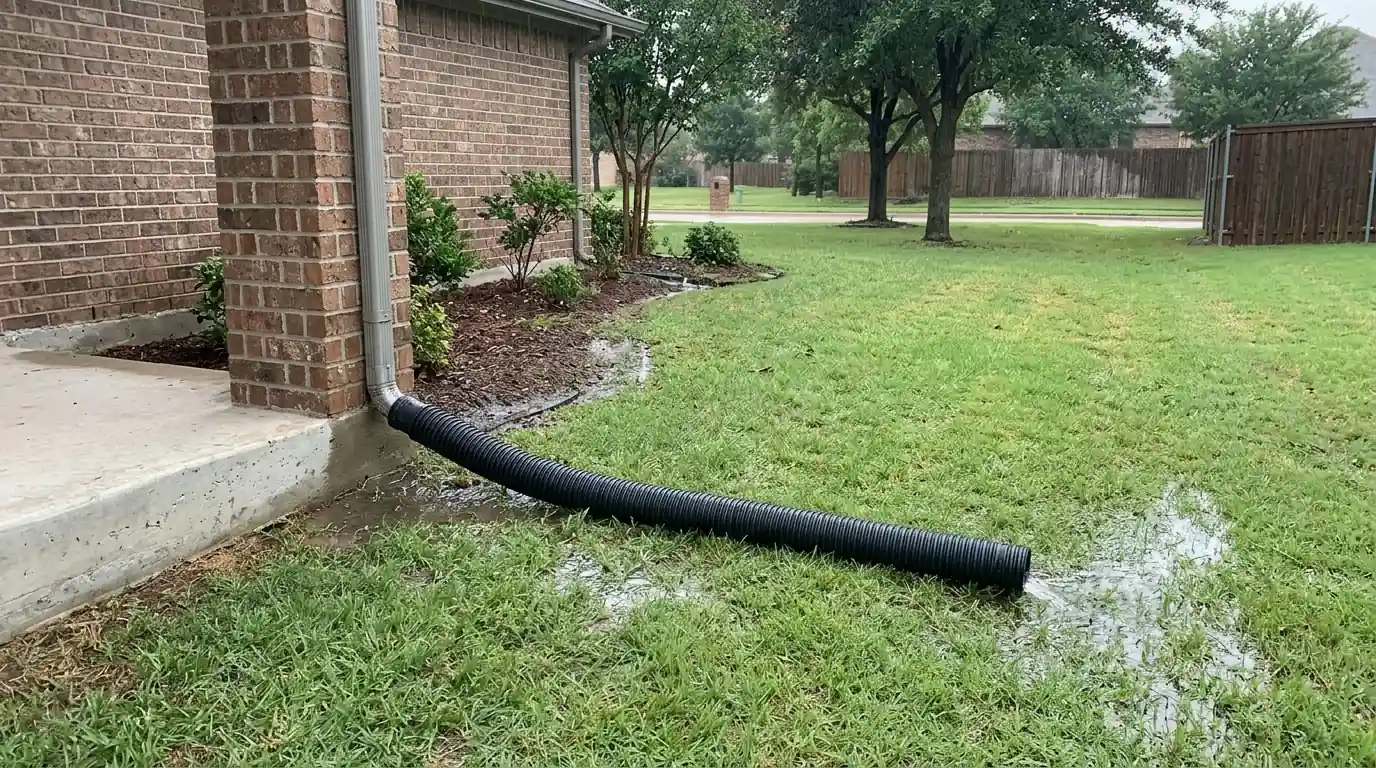
Common guidance is to carry roof water 4 to 6 feet from the foundation, onto ground that slopes away. Less than that and the water can run back toward the house; more is better when the yard allows it. What matters most is that the ground at the outlet falls away from the slab.
Three ways to move it
| Extension | Buried line | Dry well or French drain | |
|---|---|---|---|
| Fits when | There is open lawn that slopes away | Beds, walks or a drive are in the way | The lot is flat or the yard stays wet |
| Visible | Yes | Only the outlet | Mostly hidden |
| Typical cost | $9 to $38 each (HomeGnome) | $200 to $1,400 for 20 to 40 feet (UseCalcPro) | Dry well $500 to $3,000 (LawnStarter) |
| Upkeep | Re-point after mowing | Clear through a cleanout | Keep the outlet clear |
Many houses use all three: extensions where the lawn is open, buried lines past the front beds, and a dry well at the back where there is no lower ground.
Signs your downspouts are working against you
- Puddles or soggy soil against the foundation after rain.
- Mulch and soil washed out below a downspout.
- New cracks in brick or drywall near one corner of the house.
- Doors or windows that start sticking on one side.
- A downspout elbow that empties straight into a flower bed against the wall.
Fix the gutter before the drain
Drainage only works if the gutter delivers the water to the downspout in the first place. A clogged outlet, a gutter pitched the wrong way or an undersized downspout can dump water at the wall no matter how good the drain below is. We check the gutter first, then plan where each downspout should let out.
Habits that keep it working
Drainage is mostly set-and-forget, but a few habits keep it that way. Re-point hinged extensions after mowing, since one left up does nothing. Flush buried lines once a year through the cleanout, ideally before the spring storms. After a heavy rain, walk the house and look at each outlet: water should be leaving the yard or soaking in well away from the slab, not pooling at the wall or cutting a gully across the lawn.
Drainage services for clay lots
Downspout and clay soil questions
Common guidance is 4 to 6 feet, onto ground that slopes away from the house.
Only where the ground already slopes away. Otherwise an extension or buried line is better.
On expansive clay, water concentrated at one corner contributes to uneven soil moisture, which is what moves slabs.
A buried line to the street or a dry well can carry the water instead.
Sources for this guide
- Foundation plants for DFW homes, Dallas County Master Gardeners
- Texas soil and foundations, PermaPier
- French drain and downspout tie-in costs, UseCalcPro
- Aluminum gutter and extension prices, HomeGnome
- French drain and dry well prices, LawnStarter
Figures are national or regional planning numbers from the sources above, not a quote for your home.